Part 2 of 2. Read Part 1: ASRS Picking Station Design: Built for Operators, Orchestrated by Robots
Part 1 of this series covered the Rapyuta ASRS picking station itself and why we designed it to put every bin within one step of the operator. A picking station only performs as well as the system that feeds it. This part covers the rest of that system, the racks, robots, bins, and elevators that deliver bins to the station, and how those pieces add up to a strategic advantage for the operation.
Key takeaways from this article:
- Built from simple parts: Racks, robots, bins, picking stations, and elevators work as a single system.
- Direct delivery: Bins travel from storage to the operator by robot and elevator, with no intermediate conveyors or hand-offs.
- Parallel operation: Multiple robots deliver bins to different picking stations at the same time.
- Dynamic prioritization: Bins are routed by demand, storage turnover, and picking station availability.
- Human and robotic operation: The architecture supports both manual picking and automation with robotic arms.
How the Pieces Fit Together
Multi-floor racks
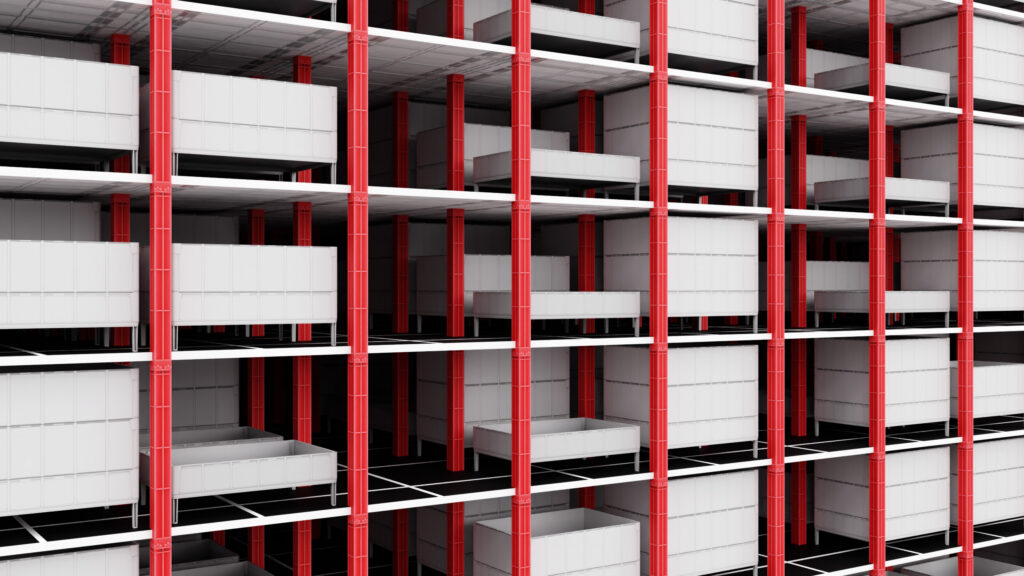
The rack is structurally divided into sections sized for one bin or one robot each, with columns at the corners. Each floor has storage areas for bins, which face movement passages, and the movement passages themselves, where robots travel.
AI-controlled ASRS transport robots
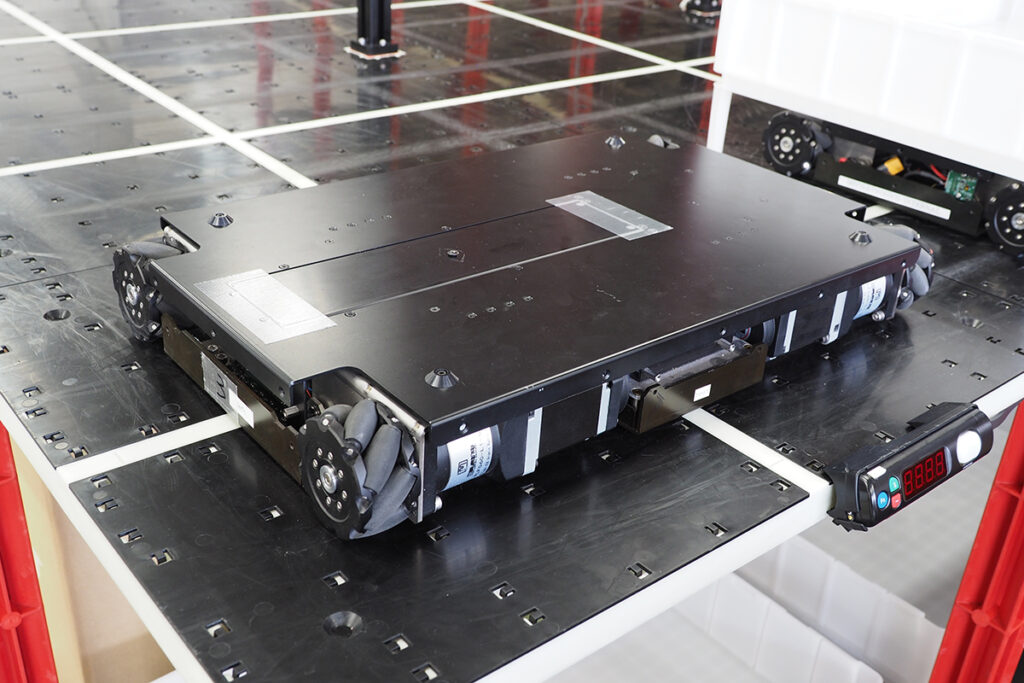
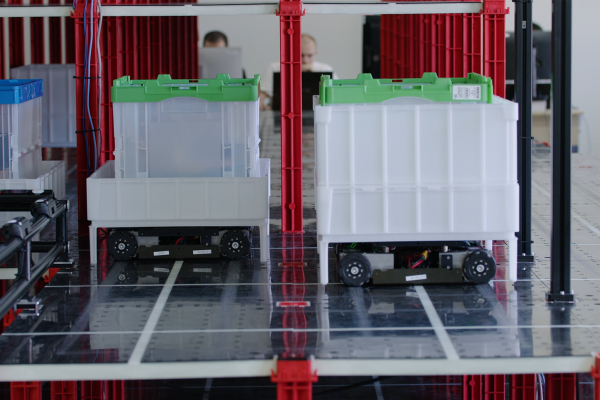
The transport robot is a compact, autonomous, height-adjustable carrier tailored for the system.
- A low-profile, height-adjustable design handles bins of all sizes.
- Optical sensors and line tracing provide precise navigation.
- The robot is elevator-ready for vertical movement between floors.
- Integrated control modules keep operations safe and reliable.
Bins
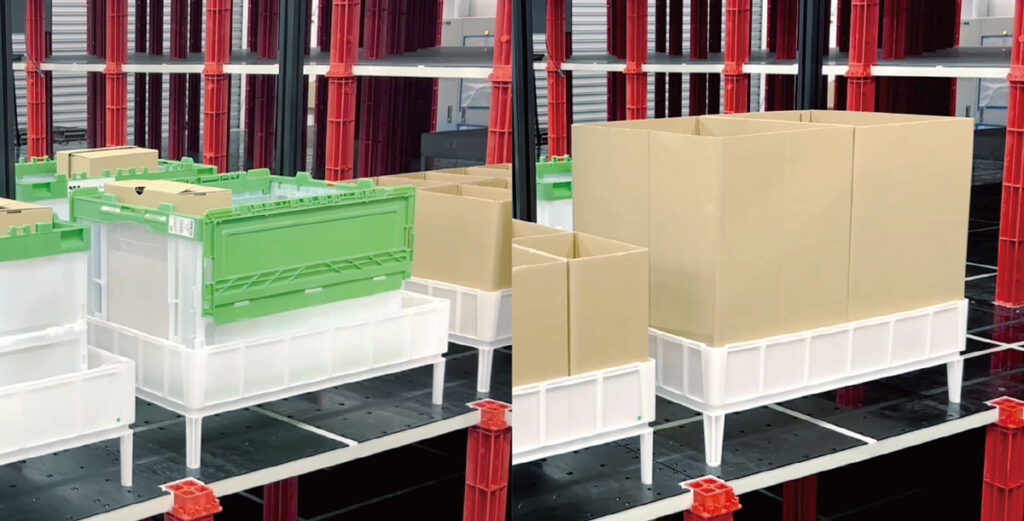
Each bin is a cuboid supported on four legs, which gives the robot clearance underneath, and each bin has a unique ID. A bin may contain one SKU type or mixed SKUs.
Picking stations
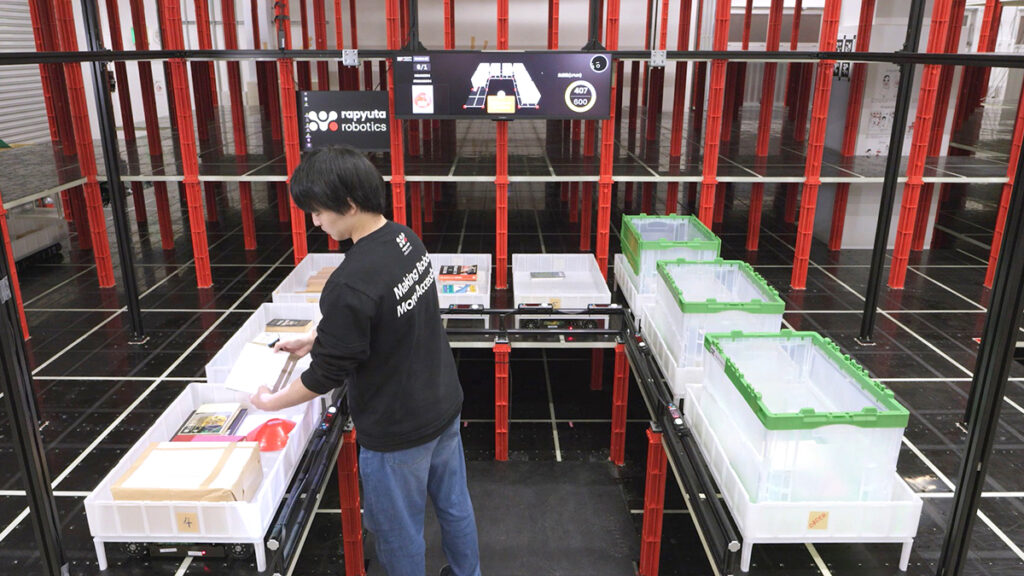
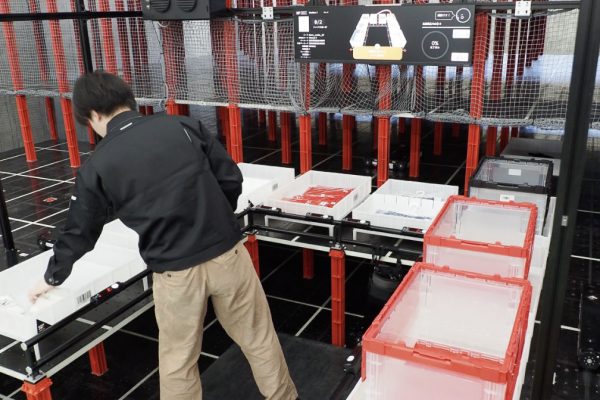
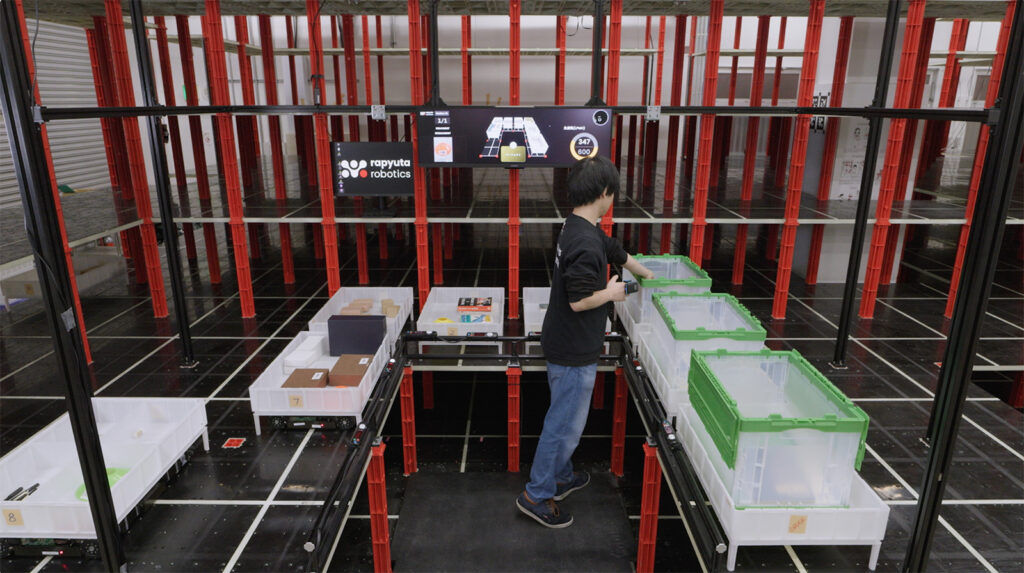
Picking stations are arranged at the rack edges, with direct robot lanes. Picking positions are in front of the operator, and loading positions sit to the side or surround the operator for quick reach. Part 1 covers the picking station design in detail.
Elevators
Elevators are located in the movement passages and carry robots vertically between floors. Each elevator has three main parts: a drive unit at the top of the structure, a lifting box that carries the robot from floor to floor, and a control box mounted on the rack beside the elevator.
Fits the building. When there is enough clearance between the top of the structure and the ceiling, the control box sits on the top level next to the drive unit. When ceiling clearance is tight, it moves one level lower. On that level, the control box can go in several positions around the elevator, so the layout team can place it to suit robot paths and overall productivity.
Safety built in. An intrusion sensor on the drive unit monitors the elevator area, and the control box carries an emergency stop button. At the bottom of the shaft, sensors slow the lifting box and confirm its position before it stops.
Human and robotic operation
The system architecture supports both manual picking and automation with robotic arms.
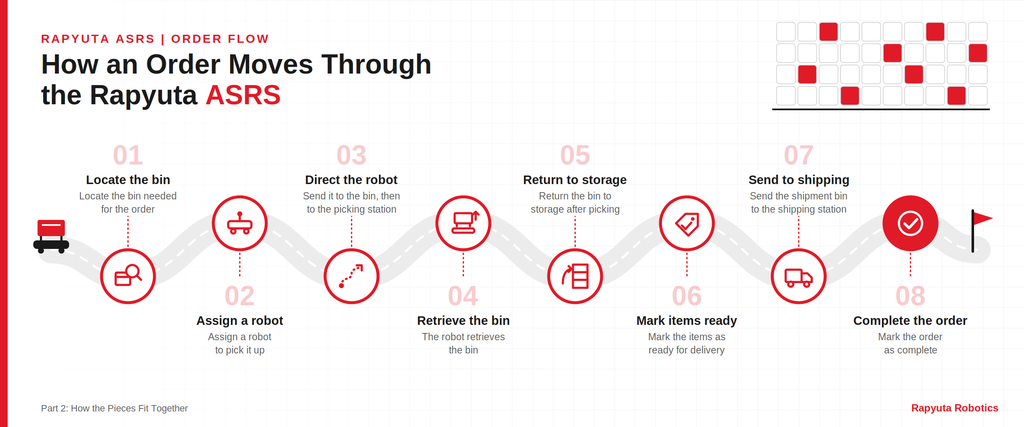
How Does an Order Move Through the Rapyuta ASRS?
Every order follows the same eight steps:
- Locate the bin needed for the order.
- Assign a robot to pick it up.
- Direct the robot to the bin and then to the picking station.
- The robot retrieves the bin.
- Return the bin to storage after picking.
- Mark the items as ready for delivery.
- Send the shipment bin to the shipping station.
- Mark the order as complete.
System Operation: Orchestrated, Parallel, and Always On
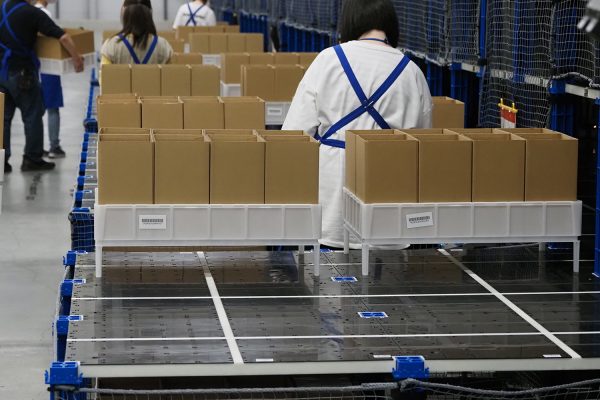
- Multiple robots retrieve and deliver bins simultaneously to different picking stations
- Operators can pick from several bins at once – loading products directly into shipment bins
- Bins return to storage or move between floors: shipment bins head to outbound docks
- Every step is tracked and choreographed to keep picking stations-and orders-moving
The Strategic Advantage of Rapyuta’s ASRS Picking Station
Rapyuta ASRS design offers more than just mechanical efficiency, it delivers operational resilience, layout flexibility, and scalability that directly impact business performance:
True Parallel Bin Handling
- Multiple bins are presented simultaneously at the picking station, enabling multi-SKU picks in a single cycle.
- Reduces operator idle time between bin changeovers, maintaining output even during high SKU-count orders.
High-Density Storage Without Sacrificing Access
- Robot and bin footprints are carefully proportioned so bins can be placed closer together without blocking access.
- Increases storage capacity within the same footprint while maintaining robot maneuverability.
Fewer Mechanical Stages = Faster Flow
- Eliminates intermediate conveyors or hand-offs between the rack and the picking station.
- Bins travel directly – via robots and elevators from storage location to operator.
Dynamic Order Prioritization
- Management server can route bins based on demand, storage turnover (popular SKUs stored lower), and picking station availability.
- This responsiveness helps meet carrier cut-off deadlines and balance peak loads.
Flexible Flows and Station Configurations
Not all orders follow the same path; Rapyuta ASRS supports multiple workflows to handle different scenarios seamlessly:
Robot Arm Stations: Most orders are directed to robot arm stations for automated picking. Small-to-medium SKUs can be picked efficiently here, with arm picking continuing overnight or during off-hours to maximize system utilization. If an order includes oversized SKUs or cannot be completed automatically, the system routes the order bin and SKU bin to a manual pick station during working hours to finish fulfillment without delay.
- Beyond efficiency, robot arm integration gives customers greater freedom in how they scale. A fully manual operation can see significant labor reduction through the system’s inherent efficiency, even before automation is introduced. From there, robot arms can be added gradually or deployed at scale, allowing customers to further streamline operations and reduce dependency on manual labor.
- Robot arms also work outside picking hours. Overnight, they can merge partially filled bins without human intervention. In a system where bins average 50% fill, merging them frees up roughly half the totes in the system, recovering storage capacity without adding any hardware. This modularity ensures automation can evolve at the pace that best fits each customer’s strategy and risk appetite
External Order Bins & Digital Assort System (DAS):
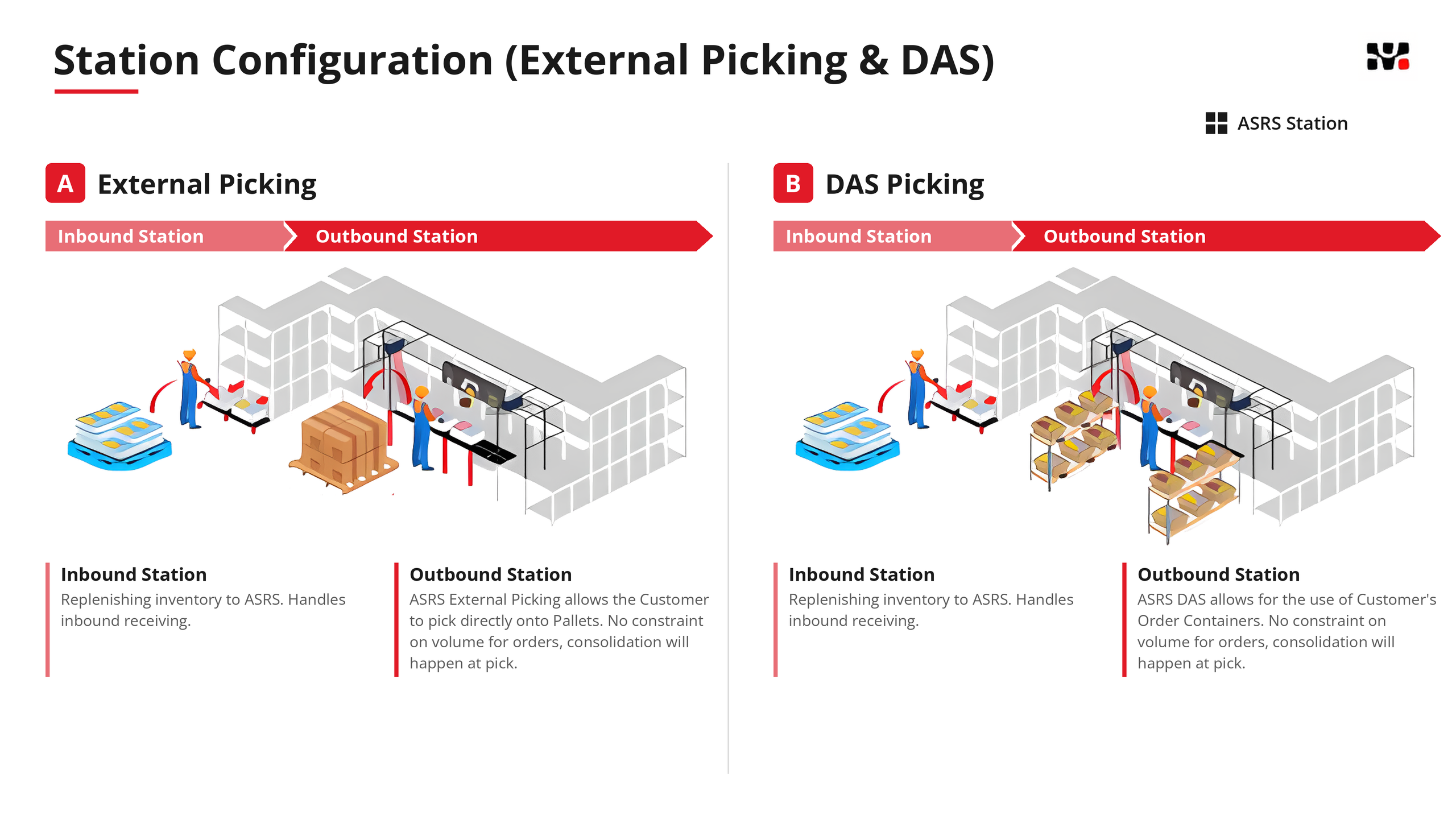
- For simple, high-volume workflows, single-SKU or fast-moving items can be picked directly into external order bins, bypassing the main pick flow to reduce congestion and speed up turnaround.
- When immediate availability is required, items can also be routed straight to loading/unloading points without passing through a pick station. Together, these options ensure rapid access for replenishment, urgent orders, and exceptions while keeping the system efficient.
Adaptable Deployment & Flexible Station for Future Scaling
- Optimized Workflow Flexibility – Edge-of-mezzanine and edge-of-rack stations allow rapid replenishment, direct robot access, and multi-station setups for assembling large or complex orders.
- Future-Ready Vertical Expansion – Elevators and multi-floor capability support densification and scalable growth without costly retrofits.
- Flexible Station Placement & Scaling – Picking stations can be positioned along any rack edge, operate in parallel across orders, and expand with additional floors, stations, or robots as volumes increase.
Conclusion
In modern fulfillment networks, the picking station is either the throughput bottleneck or the throughput accelerator. It is where every upstream investment in automation is realized or lost. Traditional systems, slowed by sequential bin delivery, conveyor transfers, and complex hand-off mechanisms, struggle to keep pace with today’s order profiles, SKU proliferation, and peak-season volatility.
The Rapyuta ASRS is engineered to remove these inefficiencies by redesigning flows at the station level. Multiple bins are presented in parallel, enabling multi-SKU picks in a single cycle and keeping operators productive. Integrated outbound bin handling removes the need for additional conveyors or staging equipment, so every robot movement contributes directly to order fulfillment. Vertical scalability through elevators densifies storage while maintaining direct access, protecting floor space as order volumes grow.
The system’s distributed software coordinates robots, bins, and operators, prioritizing orders by carrier cutoffs, SKU velocity, and station availability. This balances workloads across the warehouse and helps protect service levels under peak load. With fewer mechanical dependencies, the ASRS has fewer points of failure, higher uptime, and simpler maintenance, which lowers operational risk.
Most importantly, the architecture is built to evolve. It supports ergonomic human picking today, and its geometry and software controls are designed for robotic arms as well. This protects the initial CapEx while opening a path toward higher levels of automation without costly retrofits.
Across both parts of this series, the result is the same: the Rapyuta ASRS turns the picking station into an orchestration hub where parallel bin handling, dense storage, and intelligent control work together. For warehouse leaders, that changes how fulfillment centers are designed to compete.
See how a picking station would perform in your facility
Every picking station decision starts with your order data. Our solutions experts will review your SKU velocity, peak-hour demand, cutoff requirements, and labor model with you, then show you which station layout and station count fit your operation.
Contact us to schedule a facility analysis and see the results for your site before you commit to a system.
Frequently Asked Questions
What are the main components of an ASRS? The Rapyuta ASRS is built from multi-floor racks, autonomous transport robots, bins, picking stations, and elevators, with an architecture that supports both manual picking and robotic arms. Robots travel through movement passages in the racks, retrieve bins, and deliver them to picking stations, using elevators to move between floors.
How does an automated storage and retrieval system work? In the Rapyuta ASRS, the system locates the bin an order needs and assigns a robot to it. The robot travels to the bin, retrieves it, and brings it to the picking station. After picking, the bin returns to storage, the shipment bin goes to the shipping station, and the order is marked complete.
How does the Rapyuta ASRS prioritize orders? The management server can route bins based on demand, storage turnover, and picking station availability, with popular SKUs stored lower. This responsiveness helps operations meet carrier cutoff deadlines and balance peak loads.
Can people and robot arms pick in the same ASRS? Yes. The Rapyuta ASRS architecture supports both manual picking and automation with robotic arms. Small-to-medium SKUs can go to robot arm stations, and orders with oversized SKUs or items that cannot be completed automatically are routed to a manual pick station.
How does the Rapyuta ASRS scale as volumes grow? Picking stations can be positioned along any rack edge and operate in parallel. The system expands with additional floors, stations, or robots as volumes increase, and elevators with multi-floor capability support densification without costly retrofits.