The “Working at Rapyuta” series celebrates some of the best minds at Rapyuta Robotics. Through interviews with employees, we bring you the real story that you won’t find elsewhere.
“Is it okay if I have no experience in logistics or robotics?” “How much English is required?” “Can I succeed even if I have never worked at a startup?”
In recruiting interviews and casual interviews at Rapyuta Robotics, we often receive these kinds of questions from candidates. Changing jobs is a major decision in life. Even if you are interested in the business and the work itself, it is natural to feel uncertain about whether it is truly an environment where you can succeed.
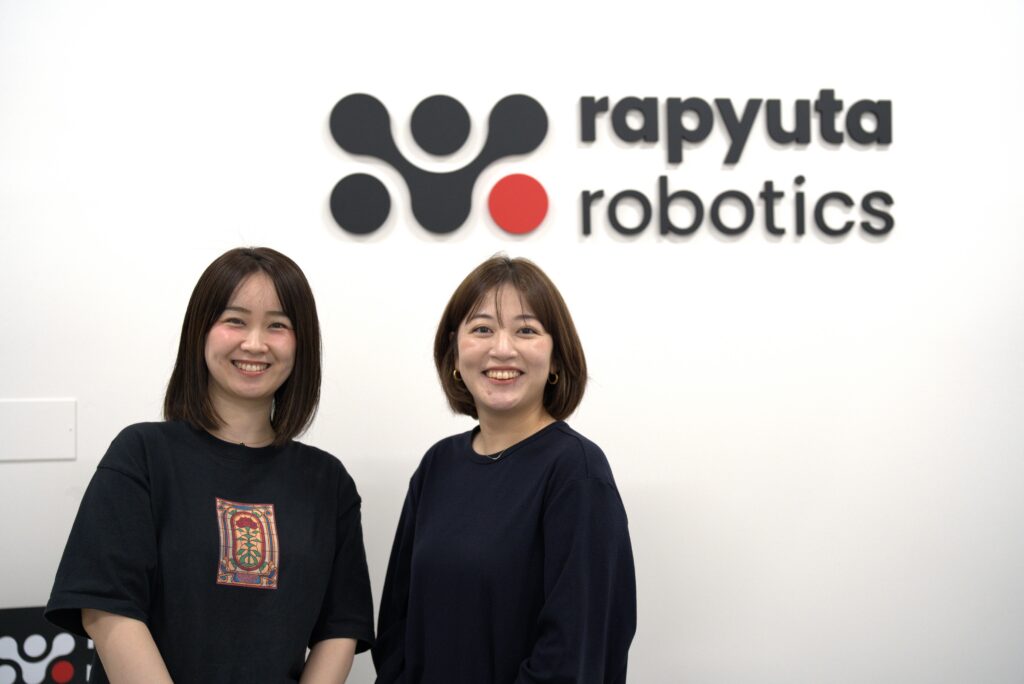
This time, we spoke with Chihiro and Yao, who are mainly responsible for recruiting for the Tokyo headquarters and Osaka branch, about questions we often receive from candidates. From the recruiters’ perspective, they speak candidly about concerns people often have before applying, what we value in interviews, and how work styles and career opportunities can expand after joining.
Q1. I have no experience in either the logistics industry or the robotics industry. Is that okay?
[Chihiro] Yes, absolutely! In fact, both Yao and I joined without any experience in logistics or robotics. Of course, the expertise required depends on the position, but not having experience in the logistics or robotics industry does not, by itself, mean that it will be difficult.
For example, for Field Engineer positions, we have members who joined from industries such as medical devices, material-handling equipment, and airlines. For Project Manager and other positions as well, we have members from a wide variety of industries, including automotive, heavy industry, and manufacturing, who joined and are now succeeding here.
I think it would be a little unfortunate to decide on your own, “Maybe I shouldn’t apply because I don’t have experience.” We would be happy to discuss together, during a casual interview or interview, which parts of your past experience could be useful and what areas you could catch up on after joining.
[Yao] Even for business roles, not everyone necessarily comes from a logistics or robotics background. People’s backgrounds are quite diverse, including the food industry, IT, SaaS, staffing sales, and hardware equipment sales. We look at whether the customer communication skills you have developed, your ability to organize issues and move things forward, and your ability to involve the people around you and turn ideas into reality can also be applied at Rapyuta. For more details about business roles and the people working in them, I think this article will help you get a clearer picture.
Q2. How much English is required?
[Chihiro] Actually, this was the point I was most worried about before applying. In every interview, including the casual interview, I asked very honestly, “I can’t even read or write without using AI. Is that okay?” (laughs). After actually joining, I found that AI, translation tools, and Teams’ real-time translation function are so capable that reading and writing in my daily work have not been a problem. People are even surprised and ask, “Chihiro, you can’t speak English?” When necessary, team members who can speak English support me, and most of the positions I am responsible for require business-level Japanese, so at this point I do not feel that English has become a blocker in my work.
[Yao] In my case, I already had a basic foundation in English, but since joining, I have had more opportunities to use English, and I feel that my writing and speaking in particular have improved compared with before. However, although it is a global environment, I do not think everyone needs to be able to speak perfectly from the beginning. Many members are not native English speakers, so there is a sense that we meet each other halfway in communication—for example, by speaking slowly or using simpler words.
[Chihiro] Of course, for positions that involve frequent communication with the engineering team in India, for example, there are cases where the English requirements are clearly defined. In those cases, the job description explicitly states requirements such as “business-level English proficiency” or “native-level English proficiency,” and we also explain them during interviews. If you have any concerns, I hope you will feel free to ask us from the beginning.
Q3. Can I succeed even if I do not have startup experience?
[Chihiro] I do not think startup experience itself matters that much. There are people in large companies who are strong at dealing with change, and conversely, even someone with startup experience may not be a good fit. What matters is whether you can think for yourself and take action when things have not yet been decided or when changes occur. I think people who find it interesting to work at a pace where something decided in a meeting starts moving as soon as the next day are likely to fit well.
[Yao] Over the past 10 years, four products have been created, and most recently we also announced our E2E business. I think it is a very good environment for people who want to use their previous experience while taking on new challenges, or who want to further broaden the scope of their current work. Rather than continuing to work only within a fixed scope, this is a company with many opportunities for people who proactively expand the areas they are involved in.
[Chihiro] That said, it is not a company where nothing has been put in place. Areas such as onboarding, the evaluation system, recruiting processes, and guidelines have gradually become more established. On top of that, I think one of the interesting aspects is that we can build, by ourselves, the parts that have not yet been fully decided.
Q4. What do you look for in interviews?
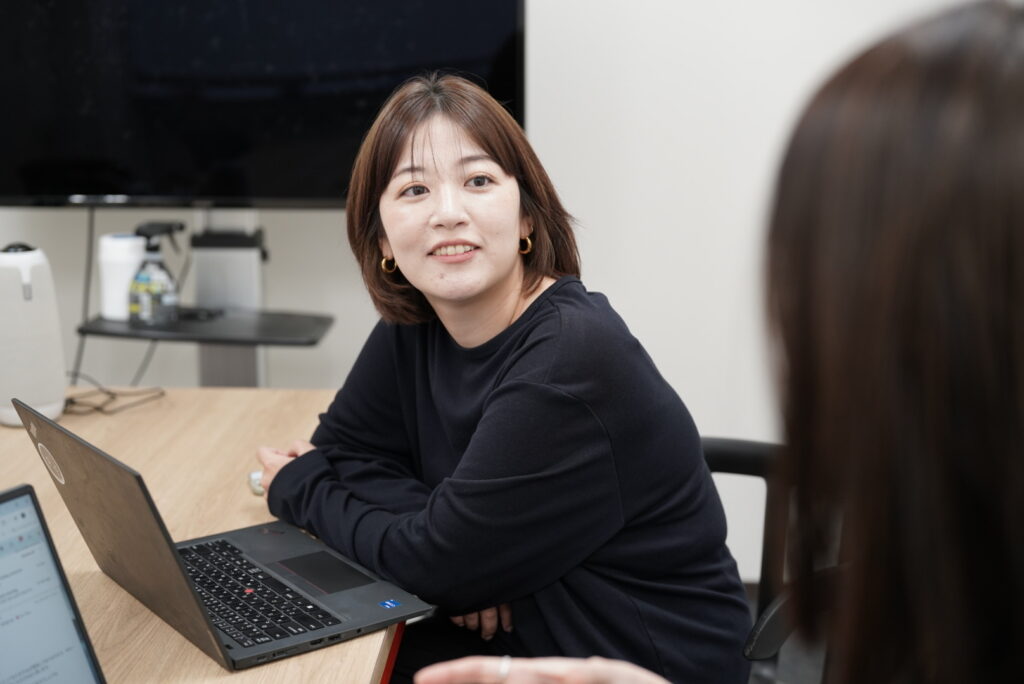
[Yao] Of course, we look at the experience and skills required for each position, but we place just as much importance on whether the person fits Rapyuta’s core values and how they have dealt with change. We also check whether their reasons for changing jobs and the criteria they use when considering a career move are consistent with the choices they have made so far.
[Chihiro] Rather than creating answers specifically tailored to Rapyuta for the interview, we would be happy if candidates simply tell us what they genuinely think. We want to get to know the candidate, and we also want the candidate to see whether Rapyuta is a good fit for them. I think an interview is a time for both sides to check whether there is a good fit.
Q5. As recruiters, are there moments when you feel, “This person seems likely to succeed here”?
[Chihiro] I often feel that people who are curious and positive about new things are likely to succeed here. For example, people who, after doing everything they can in their current environment, are thinking about what they want to learn next and how they want to increase their own value.
[Yao] I think people who do not stop when something goes wrong, but instead think of another approach and take action, are likely to succeed here. Rapyuta itself has not always had smooth sailing. We have reviewed the direction of the business and built organizations and processes from scratch in response to new challenges. Precisely because this is not an environment where the right answer exists from the beginning, I think people who can move forward through trial and error and who can respond positively to change and take action can succeed greatly.
[Chihiro] However, there is no fixed mold saying, “Only this type of person succeeds here.” Rather than judging someone based on academic background or nationality, we want to properly look at what kind of environment they have been in, what choices they have made, how they have thought, and how they have acted.
Q6. Are there things candidates often misunderstand about the company?
[Yao] First, people sometimes think we are a foreign-affiliated company. Perhaps that is because we have many members of foreign nationalities. However, Rapyuta was founded in Japan, and many of our customers are Japanese companies, so an understanding of the Japanese language and Japanese culture is an advantage. We also have foreign-national members who speak Japanese, and although our two founders are from Sri Lanka, they have native-level Japanese proficiency!
[Chihiro] Another thing that may be surprisingly little known is that our office has a demo space as well as all the spaces related to development and repair. Because the actual robots are right nearby, when you visit the office, I think you can get a sense of, “So this is the kind of place where they build them. These are the kinds of products they work with.”
Q7. Please tell us about the selection process.
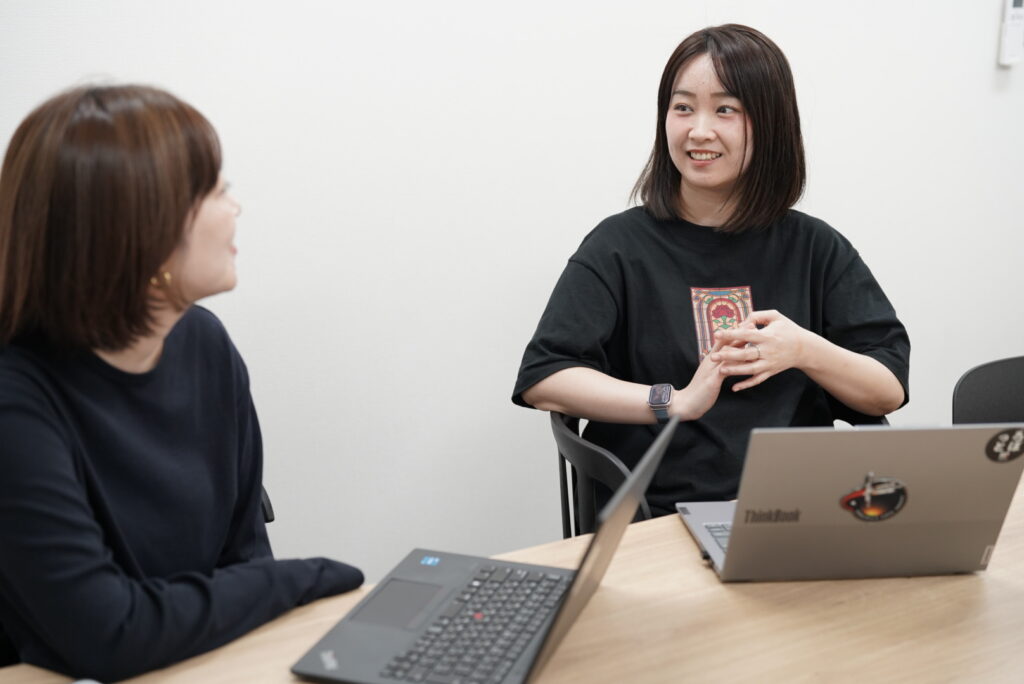
[Chihiro] In many cases, the process starts with either a casual interview with a recruiter or a first-round interview. While explaining the company, business, team, and position, we also ask about the candidate’s experience and what is important to them in this job change.
[Yao] After that, you will speak with team members, people you would work with, and business leaders. The number of interviews varies depending on the position and career level, but excluding the casual interview, three to four interviews are common. Depending on the position, we may also ask you to take an online test or undergo a reference check. If we make an offer, we arrange a separate offer meeting. We want you to make your decision after clarifying, as much as possible, not only the conditions but also any concerns or points you would like to confirm.
Q8. Is there anything you would like candidates to ask you?
[Chihiro] There are not really any set questions that we think, “We want you to ask this.” Rather, we would like you to ask us anything that you personally are concerned about. I think minimizing the gap between before and after joining is important for candidates as well.
[Yao] Once the selection process has progressed, we provide an opportunity to visit the office, so I hope you will make use of that opportunity for anything that is easier to ask in person. By seeing the atmosphere of the company and team, which can be difficult to understand online, as well as the people who actually work here and the robots, we hope you can get at least some sense of what it would be like to work here.
Q9. How can my career develop after joining?
[Yao] Regarding careers, Rapyuta has job levels and a system for promotion based on the evaluation system. As your level increases, the scope of your responsibilities expands, and your role gradually becomes larger, including developing team members, managing a team, and participating in recruiting activities.
[Chihiro] You can broaden your career horizontally as well as move upward. There are examples of people who moved from Field Engineer to Project Manager, and from Marketing to Project Manager. As new initiatives increase, I think this is an environment with many opportunities for people who proactively take ownership of areas that no one is yet responsible for.
For Those Who Are Unsure About Applying
[Yao] If you feel that you have done everything you can in your current environment and think, “I want to take on more challenges” or “I want to expand my potential,” I would really like you to learn more about Rapyuta. At Rapyuta, regardless of age or years of experience, there are many opportunities to take on new challenges. For people who feel that their current environment is not enough, or who are looking for greater autonomy and opportunities for growth, I think it is an environment where they can grow significantly while making use of their strengths.
[Chihiro] There are many things you cannot understand from a job description alone, so if you are even a little interested, I would be happy if we could first have an opportunity to talk. Applying does not mean that you have absolutely decided to change jobs, and it is completely fine if, after talking with us, you think, “Maybe this is not the right time.” Since joining, I myself have felt that there are many wonderful members not only in terms of skills and experience but also in terms of who they are as people, and I also think the products are attractive. As a recruiter—and also as an individual—I can confidently introduce both the people you would work with and the products to candidates. We look forward to speaking with you!
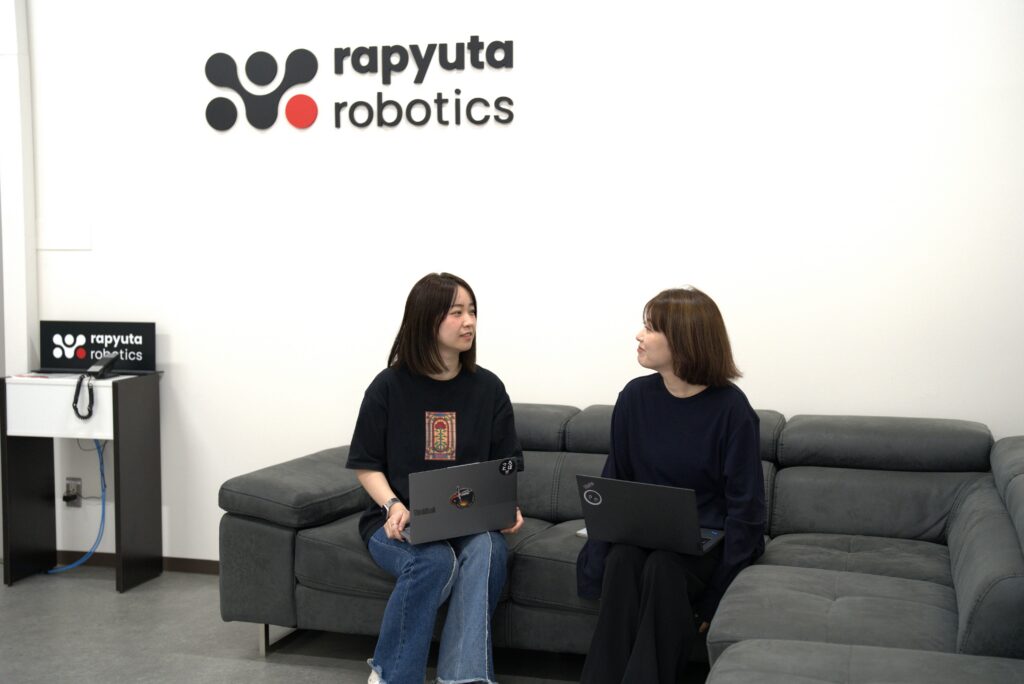
Chihiro Odoi
Recruiter at Rapyuta Robotics. After working in sales in the apparel industry, sales administration, and HR/recruiting-related roles, she joined Rapyuta. She is currently mainly responsible for positions involved from requirements definition through the implementation and operations phases, including Field Engineers, Project Managers, and Business Analysts. She is involved in a wide range of activities, from aligning position requirements and communicating with candidates to post-joining follow-up.
Yao Tong
Originally from China. After graduating from Hokkaido University and gaining work experience in hotels and co-working offices, she joined Rapyuta. As a trilingual professional using Japanese, Chinese, and English, she has been responsible for labor-related operations, onboarding, internal engagement activities, and other HR work since joining. She is currently responsible for recruiting in Japan, mainly for business roles such as Sales, as well as recruiting and HR work related to establishing the China office.
Rapyuta Robotics is looking for new team members!
[Visit the Careers Page Here]