Key Takeaways
The retail landscape has evolved from single-channel models to today’s complex omnichannel ecosystems, where customers expect speed, flexibility, and consistency across every touchpoint. Meeting these expectations requires not just multiple sales channels, but also fulfillment systems that can seamlessly work together.
The blog highlights how unified inventory is the key differentiator between fragmented multi-channel operations and true omnichannel success. Breaking down silos allows inventory to be shared across the network — distributed yet visible as one pool — enabling faster promises and more reliable service.
Automation emerges as the critical enabler, powering real-time inventory synchronization, adaptive order routing, and accurate execution. It ensures both the speed of processing and the reliability of delivering on customer promises, while also scaling with demand.
Inside the warehouse, flexibility is driven by multi-modal picking, which can be understood across two dimensions: aggregation (single vs. batch) and release (wave vs. waveless). Across the network, micro-fulfillment centers extend flexibility further by positioning inventory closer to customers, cutting last-mile costs and improving service, though they also require careful orchestration and monitoring of KPIs.
Finally, the blog introduces Rapyuta ASRS as a platform built to support these omnichannel needs. With modular, anchorless design, dynamic inventory control, and software-defined operations, it provides the adaptability to support multi-modal strategies within warehouses and micro-fulfillment deployments across networks. While not a one-size-fits-all solution, it offers a practical foundation for businesses facing diverse order streams and rising customer expectations.
Introduction to Omnichannel
Every purchase depends on two types of channels working together:
- Sales channels — how customers place an order. Examples include a physical retail store, an e-commerce website, a mobile app, or a marketplace like Amazon.
- Fulfillment channels — how that order is delivered or handed off. Options include in-store pickup, centralized distribution centers (DCs), micro-fulfillment centers (MFCs), curbside pickup, third-party logistics (3PL), or last-mile delivery networks.
A transaction is complete only when both are present: one to capture the order, another to deliver it.
From Single-channel to Multi-channel
- Single-channel: One sales channel paired with one fulfillment channel.
Example: a brick-and-mortar shop where customers buy and carry goods home, or an online-only brand shipping all orders from a central warehouse.- Simple operations, low complexity.
- But limited reach and vulnerable to disruptions in that one channel.
- Multi-channel: Multiple sales channels exist, but each is tied to its own fulfillment system.
Example: a retailer sells in-store, through its website, and via Fulfillment by Amazon (FBA). Inventory for each is siloed. Stock sent to FBA cannot serve web or store customers, forcing sellers to forecast demand per channel and accept inefficiencies.- Wider customer reach, but operations are fragmented.
- customer reach, but operations are fragmented.
- Fulfillment becomes more complex with duplicate inventory pools, inconsistent promotions, and rising costs.
The Omnichannel Difference
What makes omnichannel truly different is not just the presence of multiple sales and fulfillment channels, but the elimination of silos that traditionally separate them. In a multi-channel world, each channel operates as its own island — a store has its own stock, the website has its own warehouse pool, and marketplaces like Amazon FBA demand their own locked inventory. The result is duplication, inefficiency, and poor customer experiences when demand shifts unexpectedly.
Omnichannel breaks this paradigm by creating one unified inventory pool that serves all channels.
- A customer shopping online can see accurate stock availability in a nearby store.
- An order placed through a marketplace can be fulfilled from a regional DC or micro-fulfillment center if that’s faster or cheaper.
- Returns from any channel flow back into the same inventory system, making items immediately available for resale elsewhere.
The key point is, unified does not mean centralized in one place. Inventory can — and should — remain distributed across DCs, MFCs, stores, and 3PL partners. The key is that these locations are digitally connected and managed as a single network, so stock placement becomes fluid and intelligent rather than locked to one channel.
This architectural shift enables businesses to:
- Kill silos — no more guessing demand per channel or suffering stockouts in one channel while another sit overstocked.
- Unlock flexibility — any order can be routed to the most optimal node: closest to the customer, cheapest to ship, or best aligned with service-level agreements.
- Deliver consistency — pricing, promotions, and product availability are harmonized across all touchpoints, ensuring a frictionless customer journey.
From the customer’s perspective, the promise of omnichannel is a seamless choice: browse online, buy in-app, pick up in-store, or return anywhere. From the business perspective, it is operational leverage — the ability to move inventory, labor, and processes fluidly across channels without duplication or fragmentation.
Why It Matters
Today’s customers don’t just want products — they want convenience, speed, and flexibility. They expect to browse on mobile, compare on social platforms, buy online, and choose from multiple delivery or pickup options — all with consistent pricing, promotions, and service.
The business impact is measurable:
- Companies with strong omnichannel engagement grow 9.5% annually, nearly 3× faster than weak performers (3.4%). 1
- Customer retention is far higher — 89% for omnichannel leaders versus 33% for single-channel rivals.2
- Shoppers interacting across multiple channels show 30% higher lifetime value and are 2.5× more likely to buy again. 3
- Mature omnichannel firms operate with 27% lower fulfillment costs and 18% lower cart abandonment thanks to unified operations. 4
This evolution shows why sales and fulfillment cannot be treated separately. Only by connecting them into an omnichannel model can businesses meet modern expectations while gaining efficiency, loyalty, and long-term growth.

The Critical Role of Automation in Omnichannel Success
Omnichannel fulfillment isn’t just about connecting more sales and delivery channels — it’s about making them work together as one seamless system. That integration is impossible without automation, which acts as the glue that binds distributed inventory, complex order flows, and diverse customer touchpoints into a single, reliable network.
Two Promises to the Customer: Speed and Accuracy
Automation allows businesses to meet the two most critical promises in omnichannel:
- Speed: Customers expect their orders to move from click to delivery in days, often hours. Automated picking, routing, and last-mile coordination reduce cycle times that manual operations cannot match.
- Accuracy: Just as important as being fast is being reliable. Real-time inventory synchronization ensures that when a promise is made — two-day delivery, curbside pickup within an hour — it can be kept. Without automation, promises to break down into cancellations, delays, and lost trust.
Real-Time Inventory as the Foundation
The cornerstone of omnichannel automation is a single source of inventory truth. Advanced WMS and distributed order management (DOM) systems maintain up-to-date visibility across DCs, micro-fulfillment centers, stores, and 3PLs. This doesn’t mean inventory is co-located in one mega-warehouse — it can remain distributed. What matters is that it’s digitally unified so stock can be allocated from anywhere.

Retailers that achieve real-time inventory synchronization typically see a 10% boost in customer satisfaction and 5% increase in sales, because shoppers can trust that product availability and delivery promises are accurate.
Intelligent Order Orchestration
Once inventory is unified, automation enables SLA-aware order orchestration. DOM platforms automatically choose the best fulfillment node for each order based on proximity, cost, labor capacity, and carrier cut-offs. This allows strategies like ship-from-store, ship-to-store, and BOPIS to run smoothly, cutting last-mile costs while improving speed.
Efficiency Inside the Warehouse
Warehouse automation technologies — from automated storage and retrieval systems (AS/RS) to autonomous mobile robots (AMRs) — further accelerate omnichannel success. They streamline picking, reduce walking time, and improve accuracy, leading to dramatic productivity gains. One fitness retailer, for example, achieved a 135% improvement in pick rate and cut in-aisle walking by half after deploying robotics.
Returns and Reverse Logistics
Automation also closes the loop on returns. Intelligent triage and directed put-away ensure that items re-enter the shared inventory pool quickly, minimizing lost sales opportunities. In non-automated systems, returned items often sit idle or get misplaced; in automated networks, they are saleable within hours.
Scalability and Resilience
Finally, automation ensures that omnichannel operations can scale with demand without exploding labor costs. During peak seasons like Black Friday, automated systems can absorb volume surges through parallel processing and dynamic allocation. McKinsey estimates that digitalized supply chains5 can reduce operating costs by up to 30% and shrink lost sales by as much as 75%.
Multi-Modal Picking: Operational Flexibility Inside the Node
Once automation establishes a unified inventory and SLA-aware order routing, the next challenge is how to execute inside the warehouse. Omnichannel fulfillment brings wildly different order profiles under one roof:
- Small, single-line e-commerce orders,
- Bulk case replenishment for retail stores,
- Unpredictable spikes from promotions or same day promises.
No single picking strategy can efficiently handle this diversity. The solution is multi-modal picking — the ability to run different strategies in parallel, orchestrated by automation.
Two Dimensions of Picking
Picking strategies can be explained through two core dimensions: aggregation and release. Aggregation is about how many orders are handled at once. Single or discrete picking processes one order at a time with high accuracy but low efficiency, suited to urgent or complex orders. Batch or cluster picking combines multiple orders, grouping SKUs to cut travel time and raise throughput — ideal for mid-volume e-commerce or wholesale replenishment.
Release defines when orders are pushed to the floor. Wave picking sends them out in scheduled batches tied to labor shifts, dock times, or carrier cut-offs, making planning easier. Waveless or continuous picking feeds orders in real time, critical for fast promises like BOPIS or same-day delivery where waiting for the next wave would cause delays.
The 2×2 Multi-Modal Grid
When you cross these two dimensions, the four commonly cited methods fall naturally into a matrix:
| Aggregation ↓ / Release → | Wave | Waveless |
| Single / Discrete | Planned drops of individual orders. Useful for dock-aligned, time-sensitive shipments | Continuous “hot-lane” processing. Ideal for BOPIS orders that must be ready within 1–2 hours. |
| Batch / Cluster | Classic scheduled waves: grouped orders optimized for travel efficiency (e.g., replenishment runs) | Dynamic “revolving batches”: the system keeps aggregating and refreshing picks as new orders arrive. |
Why This Matters
The above 2×2 view clarifies that multi-modal picking isn’t a collection of four random methods, but the ability to flex across both dimensions simultaneously. Aggregation drives efficiency by reducing travel and labor, while release drives responsiveness by aligning order flow with real-time demand.
Omnichannel fulfillment demands both — handling bulk replenishment and urgent hot orders under the same roof — and automation is the enabler that makes it possible to run these quadrants in parallel, without compromise.
Micro-Fulfillment: Location Flexibility Across the Network
Omnichannel doesn’t only demand flexibility inside the warehouse — it also requires flexibility across the network. This is where micro-fulfillment centers (MFCs) come in. MFCs are compact, automated nodes located close to demand, often in urban areas, store backrooms, or small industrial sites. They sit between large distribution centers (DCs) and store-based fulfillment, offering the speed of local operations with the efficiency of automation.
By positioning inventory closer to customers, MFCs deliver three key benefits:
- Speed: same-day or next-day delivery becomes standard, and BOPIS orders can be ready within hours.
- Cost: last-mile transportation distances shrink, cutting parcel and carrier expenses.
- Experience: customers enjoy faster, more reliable pickup or delivery options, while stores avoid the disruption of picking from the shop floor.
How It Works with Automation
For MFCs to succeed, they must be tightly integrated into the wider fulfillment network. Automation plays two critical roles:
- Unified inventory and orchestration: Distributed Order Management (DOM) ensures MFCs, DCs, and stores operate as one logical inventory pool. Orders are automatically routed to the node that best meets SLA, cost, and capacity constraints.
- Goods-to-person efficiency: High-density automated storage and retrieval systems (AS/RS) or mobile robotics compress inventory into small spaces while keeping throughput high.
- Smart SKU strategy: Fast-moving, high-demand items are stocked locally at MFCs, while slow movers and bulk items remain in regional DCs. This balance maximizes utilization without overloading small sites.
Challenges and Metrics
While powerful, MFCs come with their own risks:
- Underutilization if order volumes are thin or poorly forecasted.
- Operational complexity from managing many smaller nodes.
- Limitations when dealing with bulky, low-velocity, or oversized items.
To ensure MFCs deliver value, businesses should track a clear set of KPIs:
- Lead time (click-to-pickup / order-to-door).
- Ratio orders fulfilled locally vs. from regional DCs.
- Node utilization and inventory turns.
- Last-mile cost per order.
Scalable systems like Rapyuta ASRS address many of these challenges by fitting into constrained spaces, adapting to demand growth, and integrating seamlessly with broader networks. This ensures MFCs remain both productive and cost-effective as omnichannel operations expand.
Rapyuta ASRS: Enabling Flexible Omnichannel Fulfillment
Omnichannel fulfillment places pressure on both processes inside the warehouse and the network that connects them. Rapyuta ASRS‘ design addresses some of these challenges. Its role is not to replace every system, but to provide a flexible foundation that helps businesses adapt more easily to changing order profiles, space constraints, and customer expectations. By combining modular hardware with intelligent software, it aims to reduce friction when scaling operations or rethinking fulfillment strategies.
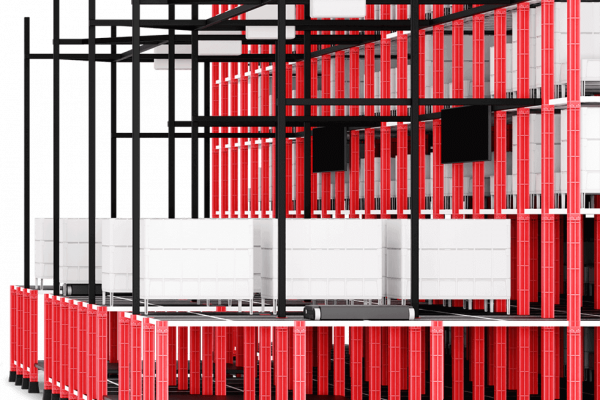
Several capabilities make this possible. The modular, anchorless design allows deployment in existing facilities and tight urban sites without major structural work and makes relocation an option if strategies evolve. High-density storage with dynamic bin positioning improves space efficiency and shortens retrieval times for fast-moving items.
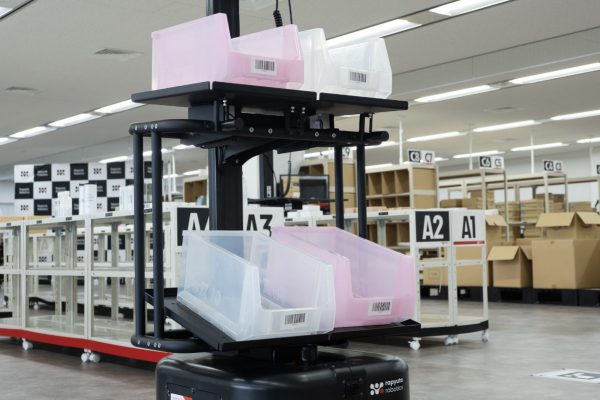
A fleet of robots with omnidirectional movement supports steady throughput even during busy periods, while software-defined workflows make it possible to shift between batch, waveless, or hybrid picking without reconfiguring hardware.
Taken together, these features support the broader needs of omnichannel operations. Rapyuta ASRS can help enable multi-modal picking inside the warehouse and micro-fulfillment deployments across the network, offering both process and location flexibility. It is not a one-size-fits-all answer — lower-volume or bulky-item operations may not benefit in the same way — but for businesses managing diverse order streams and rising customer expectations, it provides a practical path toward more reliable, scalable fulfillment.
- Reference: Aberdeen Group. Omni-Channel Customer Care: Empowered Customers Demand a Seamless Experience. By Omer Minkara. Boston, MA: Aberdeen Group, October 2013. ↩︎
- Reference: IDC Retail Report 2015 and Unique Data Insights by Porch Group Media ↩︎
- Reference: Aberdeen Group. Omni-Channel Customer Care: Empowered Customers Demand a Seamless Experience. By Omer Minkara. Boston, MA: Aberdeen Group, October 2013. ↩︎
- Reference: Omnichannel Commerce Retail Trends for 2025 by Manhattan Group ↩︎
- Reference: Article “Succeeding in the AI Supply Chain Revolution” by Mckinsey & Company ↩︎