The “Working at Rapyuta” series celebrates some of the best minds at Rapyuta Robotics. Through interviews with employees, we bring you the real story that you won’t find elsewhere.
Working at Rapyuta
Naomi Moriya – Senior Business Analyst
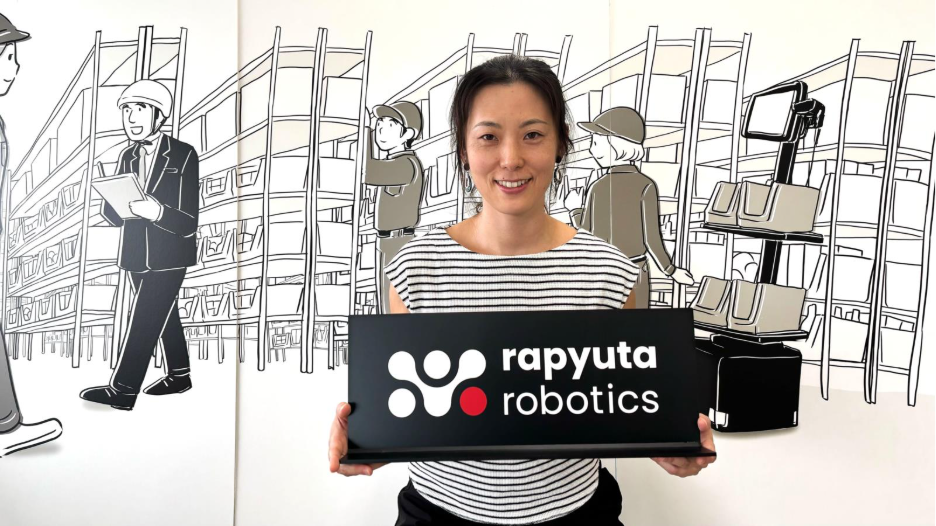
Naomi joined Rapyuta Robotics in October 2021. After graduating with a degree in the humanities, she began her career at a major SIer, where she gained hands-on experience in system development and discovered her passion for data analysis. At Rapyuta, she joined as a Senior Analyst in charge of robotics simulations. Since then, she has expanded her scope—moving beyond data analysis to making productivity improvement proposals, creating frameworks for experiment results, and building the role model of “Business Analyst” from scratch. Today, together with a five-member team, she continues to explore new possibilities through data-driven insights.
The Role of a Business Analyst: Delivering True Value
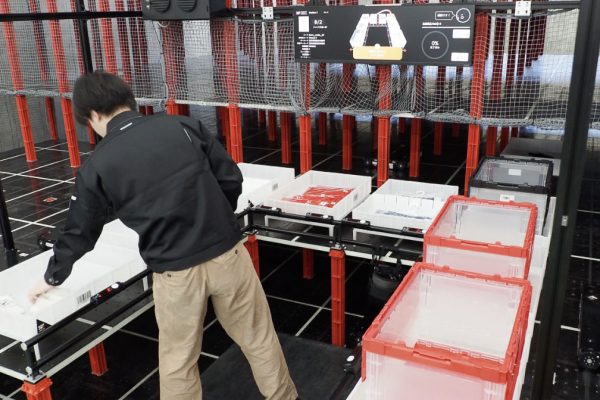
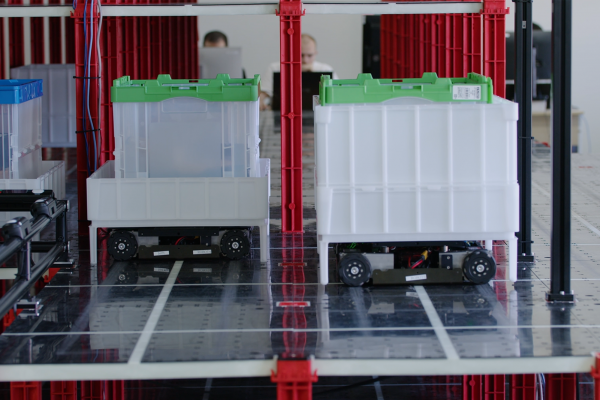
As a Business Analyst (BA), I am mainly responsible for Rapyuta ASRS (Automated Storage and Retrieval Systems). Our role is to analyze data both at the pre-implementation stage and after the system go-live. This includes presenting the best implementation plan and working on solutions to challenges that may arise after deployment.
For example, when customers are considering ASRS, we analyze their warehouse data and operations to simulate and estimate requirements such as: “How many ASRS units are needed for this scale?”, “How many bins will likely be required?”, and so on. We then verify whether performance can be realized, whether productivity gains can actually be achieved, and if there are bottlenecks, identify where they may occur before making proposals to the relevant departments.
After go-live, we analyze operational data from real sites to identify bottlenecks and propose improvements. If we find issues on our side, we work closely with engineers to improve the system. It’s also important to deepen our understanding of system design and development, so that knowledge gained from individual projects can be standardized and stored as company-wide expertise. Turning these individual learnings into shared organizational knowledge is where the value of a Business Analyst truly shines.
Building a Role From Scratch: The Challenge of an Undefined Frontier
Today, our BA team has six members, but when it was first established, I was the only one—and we had to build everything from zero.
I originally joined Rapyuta as a BA for Rapyuta PA-AMR (Picking Assist Robots), handling simulations. From there, I gradually expanded my work to real-site analysis and productivity improvement proposals. When ASRS was launched, we decided to apply the same approach there. But since no one had ever done this kind of work for ASRS, we had to pioneer it from the ground up.
At first, I started by responding one by one to requests from Sales. Soon, I began receiving vague requests such as “Could you look into this?” or “Please analyze something around this area.” I had to figure out how to respond and how to use the data, even though there were no rules or processes in place. It was tough but rewarding.
On top of that, the scope of work kept evolving depending on the stage of operations—for example, initially we could only analyze simulations, but once robots started running, we could also use log data for operational analysis. Even today, there are no fixed boundaries, so defining the work ourselves is the most challenging part of being a BA at Rapyuta. Personally, I enjoy carving out new paths in undefined spaces—bringing something from zero to about 60% completion so it can be handed over to the next phase. That process is a major source of motivation for me.
Doing What No One Has Done Before: The Skills That Matter Most
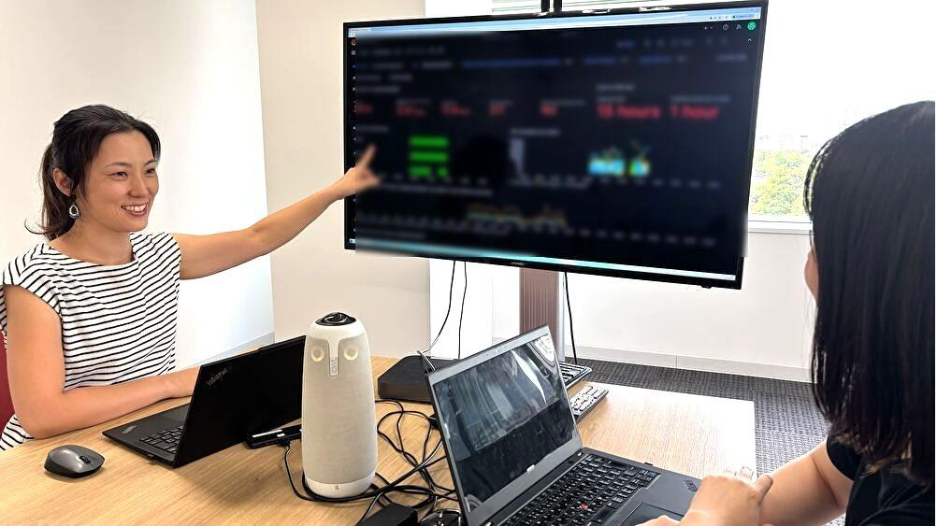
The essence of BA work lies in uncovering bottlenecks through data analysis and forming hypotheses from multiple perspectives. We often hold in-depth discussions as a team, and when a hypothesis we’ve developed turns out to be correct, it’s so rewarding that I feel like pumping my fist in celebration.
The key to forming hypotheses is the ability to notice insights. Understanding customer warehouses and operations, as well as knowing how our robots function, is of course important. But more than technical expertise or industry experience, what truly matters for a BA is the ability to think logically and critically.
In my own case, I had no background in robotics or logistics before joining Rapyuta. I had never even set foot in a warehouse. Logistics data itself is not overly complex, and I was able to deepen my understanding of our robots through simulation work. Whenever I had questions, I would ask engineers directly, and thanks to our open culture, everyone generously shared their knowledge.
The key is not just absorbing knowledge, but applying it effectively. Here, Rapyuta’s core values are essential.
- First Principles: Digging into the essence of things to build optimal solutions.
- Simplicity: Organizing information clearly to eliminate waste and improve usability.
These values are inseparable from the BA role and directly shape our day-to-day work.
Why a Humanities Graduate With No Industry Experience Thrives as a Business Analyst
As I mentioned, I come from a humanities background. My entry into the systems world began at the SIer I joined as a new graduate, where I worked on e-commerce site development and operations, sales data analysis, and data warehouse and dashboard development. That’s where I discovered the excitement of data analysis.
Over the years, I worked on multiple projects and grew my career. But in my previous company, the career path was limited: either become a manager or a technical expert. There was little room to stay close to the field and continue pursuing the essence of data analysis. I was strongly drawn to the role of bridging business and data, and decided to join Rapyuta Robotics, a venture company with more flexible career paths.
Although I joined with little direct industry background, my past experiences have been highly useful. In particular, my experience in client-facing roles—where I translated technical analysis results into materials tailored to the customer’s understanding—has been directly relevant to my current work.
At Rapyuta, BA is not just about crunching data. True to the title “Business Analyst,” we are analysts who can speak on the business side. While engineers analyze robot performance and sales or logistics consultants design customer operations, we stand in between—bridging both perspectives to provide clear, data-backed proposals to customers.
Because of this role, communication and presentation skills are just as critical as analytical ability. I feel that my past experiences give me a strong edge here.
Creating a Path in an Undefined, Answer-less Space
My current goal is to systematically organize the still-undefined areas of ASRS—such as analyzing live operational data and resolving bottlenecks—into frameworks. I want to establish theories and case studies on what to focus on and how to improve system performance. Looking ahead, I hope to take on even bigger challenges, such as optimizing the robot movements themselves by implementing new logic.
From a workflow perspective, pre-implementation has a clear timeline, while post-implementation is still new territory where we respond flexibly to issues raised from the field. In the future, I aim to standardize this into regular processes and reports, building a smooth handoff to our Customer Success team.
On the team management side, I am working to clarify role division further and create a more efficient system. Since our team is still young and the robots we handle are new, we are in a stage of exploring new initiatives across departments.
Some members are based overseas, and we maintain close communication through daily meetings. Moving forward, I’d like to introduce more structured workflows, clear role definitions, and better tools to make collaboration even smoother.
Of course, there are still areas under development. But for me, the very appeal of being a BA lies in having the autonomy to build new structures from scratch. Rapyuta is the perfect environment for people who want to think independently, take initiative, involve others, and challenge themselves flexibly. If you’re looking for something exciting and meaningful, the BA role can be truly rewarding.
Rapyuta Robotics is looking for new team members!
[Visit the Careers Page Here]