At a glance
| Item | Details |
| Company | Kokubu Hokkaido Co., Ltd. |
| Site | Sapporo Logistics Center, Nishi-ku, Sapporo, Hokkaido, Japan |
| Business | Wholesale of alcoholic beverages and food |
| Main products | Processed foods, alcoholic beverages |
| SKUs | About 14,000 |
| Annual shipments | About 6.3 million cases |
| Go-live | July 2025 (full production from August 2025) |
| PA-AMR area | About 16,100 sq ft (1,500 m²) |
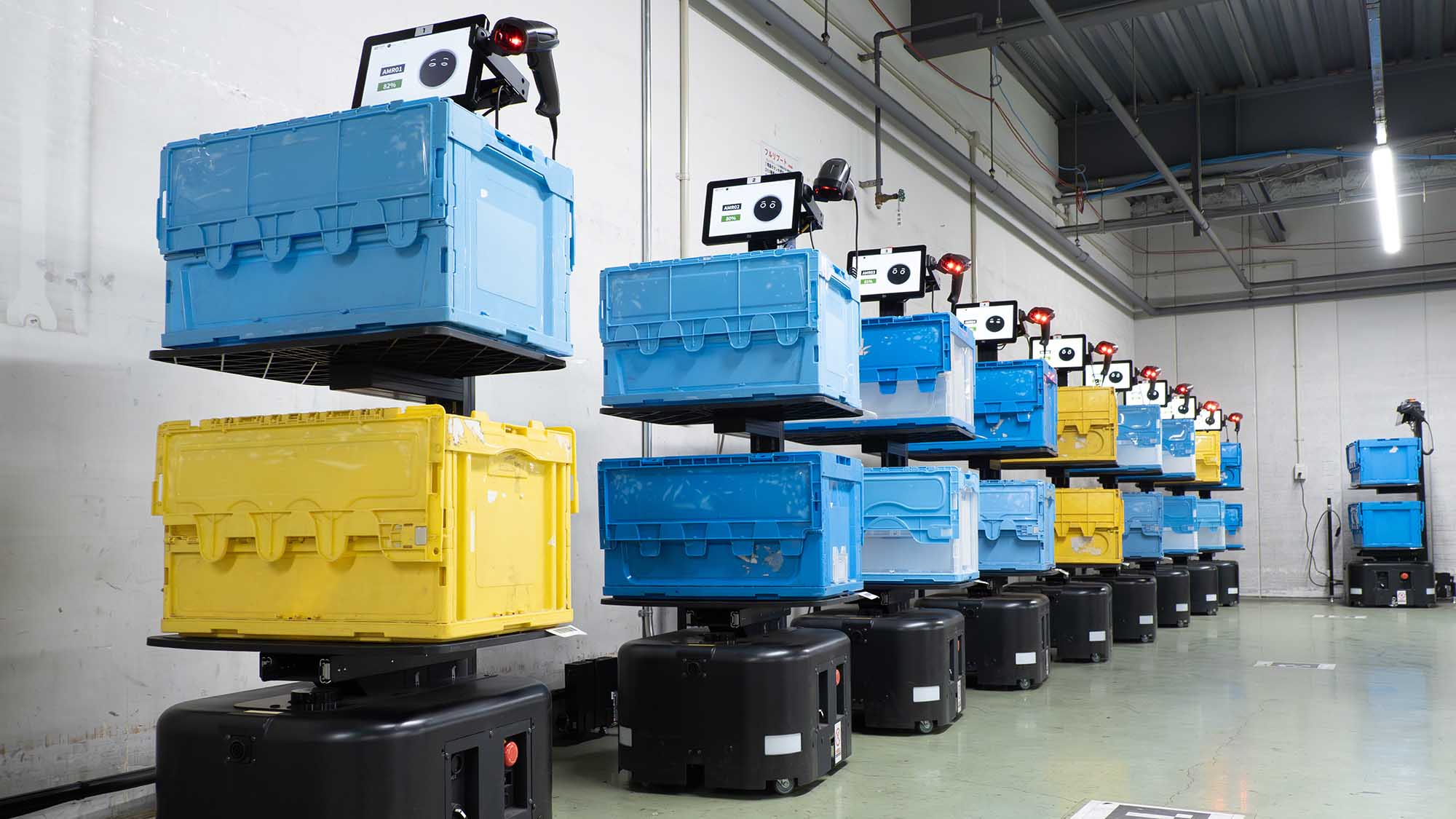
| Robots | 10 PA-AMRs |
Key results
| Metric | Before deployment | After deployment |
| Picking productivity | 41 LPMH | 93 LPMH (August 2026) |
| Floor headcount, including unloading | 8 to 9 people | 4 to 5 people |
LPMH: lines per man-hour. Staffing, mispick, and overtime results as of the interview.
Summary
With Rapyuta PA-AMR, Sapporo Logistics Center increased picking productivity from 41 to 93 LPMH while reducing the number of workers needed for daily operations, including unloading, from 89 to 4–5. Kokubu Hokkaido and Rapyuta Robotics’ customer success team continue to set the next targets together.
- Picking productivity rose from 41 LPMH before deployment to 93 LPMH as of August 2026, about 2.26 times higher.
- PA-AMR went into a building more than 30 years old without major layout changes.
- Go-live came about six months after detailed evaluation began in late 2024.
- During startup, temp workers ran the floor on their own on some days with no issues operating PA-AMR.
- Picker travel, carrying, and cart handling dropped, and routine overtime declined.
- Monthly reviews with Rapyuta use worker-level and robot operating data to keep improving.
Interviewees
- Junji Shima, General Manager, Logistics & Systems Department, Kokubu Hokkaido Co., Ltd.
- Naoki Fujita, Deputy General Manager, Logistics & Systems Department, and Manager, Logistics Operations Section
- Masakatsu Aburatani, Group Leader, Logistics Sales, Logistics Operations Section, and Center Manager, Sapporo Logistics Center
- Yoshitaka Kato, Group Leader, Logistics Operations Section, and Center Manager, Eniwa Distribution Center
- Tomoki Mori, Logistics Sales, Logistics Operations Section
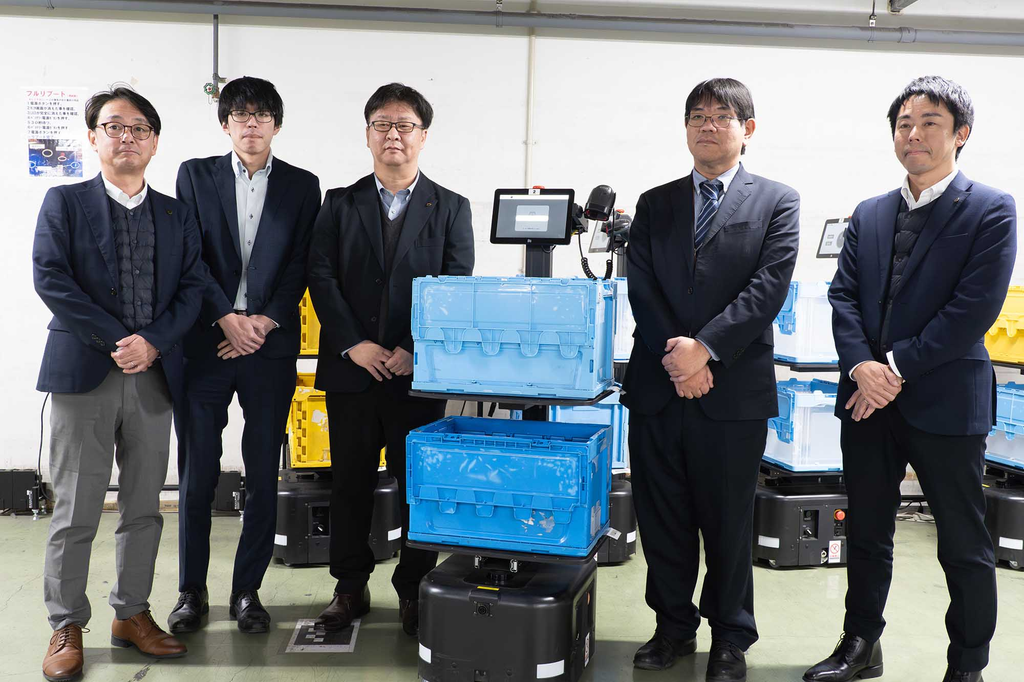
Overview
Kokubu Hokkaido supports food distribution across all of Hokkaido. Its Sapporo Logistics Center (Sapporo LC) is the main hub for the Sapporo area and the largest logistics site in Hokkaido. It handles about 14,000 SKUs of food and alcoholic beverages and ships about 6.3 million cases a year. Hiring for the floor was getting harder, and work that depended on individual experience was reaching its limits.
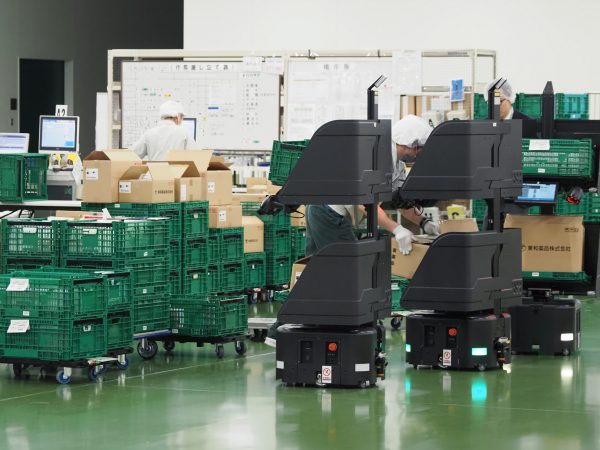
Sapporo LC deployed Rapyuta PA-AMR, the picking-assist robot from Rapyuta Robotics. The robots started running on July 14, 2025, and moved to full production on August 16, 2025. This case study covers why Kokubu Hokkaido chose PA-AMR, how it went into an existing center, what changed after go-live, and how those changes are leading to the next improvements.
The challenge
Labor availability was the core risk
Sapporo LC began moving toward automation around the end of 2024. Rising labor costs played a part, but the bigger concern was whether the center could keep securing the people it needed at all. Distribution runs every day. To keep the center running as hiring got harder, it needed an operation that did not rely only on adding people to absorb volume.
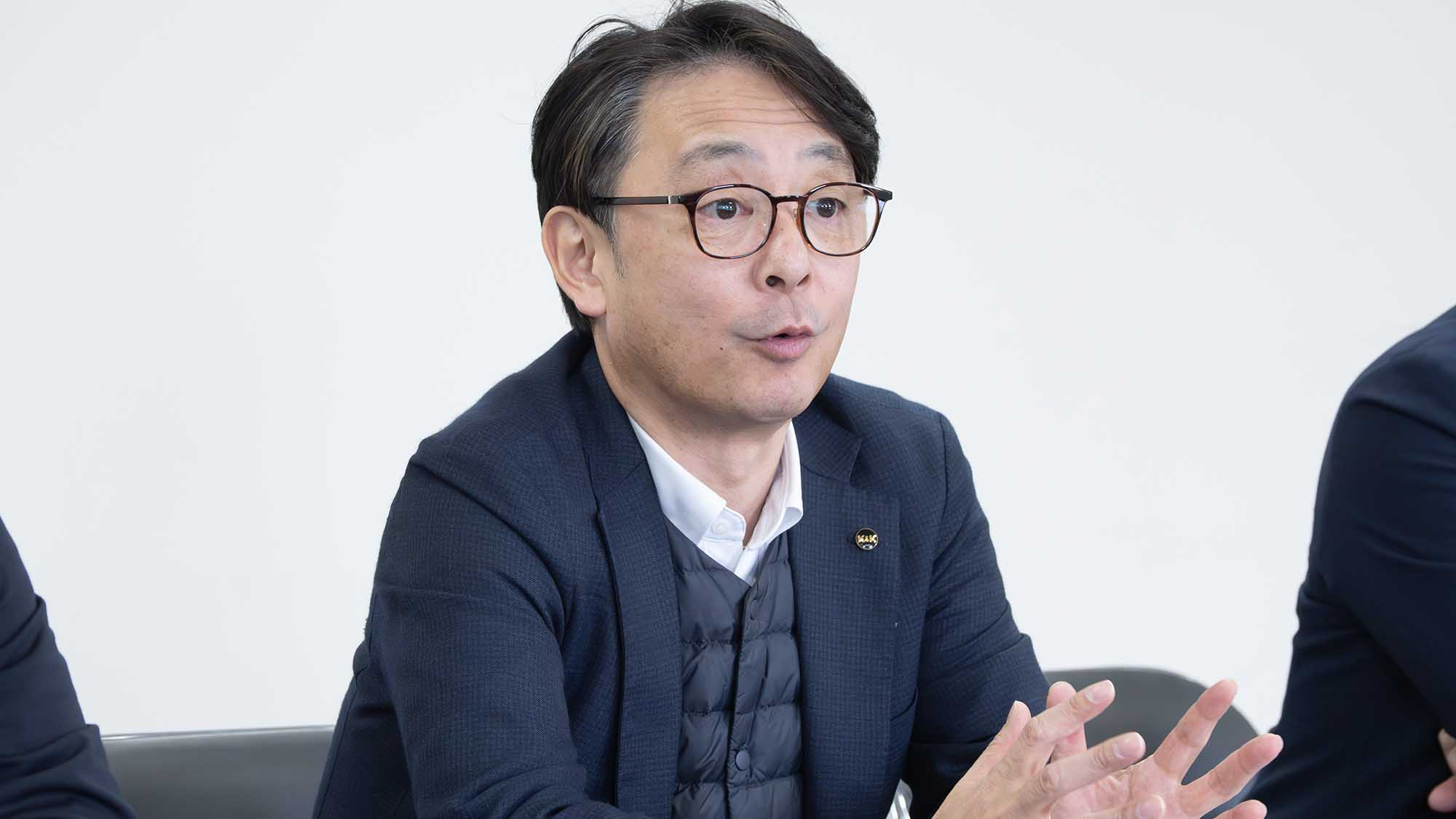
“Looking a little ahead, we had a real concern that we might no longer be able to secure people. The starting point was to build a setup where we could run the center with fewer people, so we could keep operating no matter what.”
Slow ramp-up for new hires
The second issue was work that depended on individual experience. Sapporo LC was using more short-term hires and temp workers, but picking with handheld scanners and paper lists relied partly on the experience of veteran workers. New workers took time to reach the same quality and productivity.
The problem went beyond headcount. One part was supply: securing the people the center needed. The other was operational: building a way to keep work running smoothly as people came and went. The center had to solve both. With a shrinking and aging workforce, reducing the physical strain of walking and carrying heavy items had also become a priority.
An existing facility not designed for automation
Sapporo LC was not built with automation in mind. The oldest part of the center is about 40 years old, and the area where PA-AMR went in is more than 30 years old. Kokubu Hokkaido needed to keep using the existing building while changing the work so it could run with fewer people and depend less on experience.
Kokubu Hokkaido’s goal was efficiency and standardization together, not headcount reduction alone. PA-AMR came under evaluation as a way to deliver both inside the existing center.
The approach
Proven within the Kokubu Group and integrated with its WMS
Kokubu Hokkaido looked at automation options beyond PA-AMR. A major source of confidence was that PA-AMR was already running elsewhere in the Kokubu Group. Kokubu Kanshinetsu deployed it first, so the team could study real operation there and picture how it would work at Sapporo LC. Sapporo LC is the second Kokubu Group site to deploy PA-AMR.
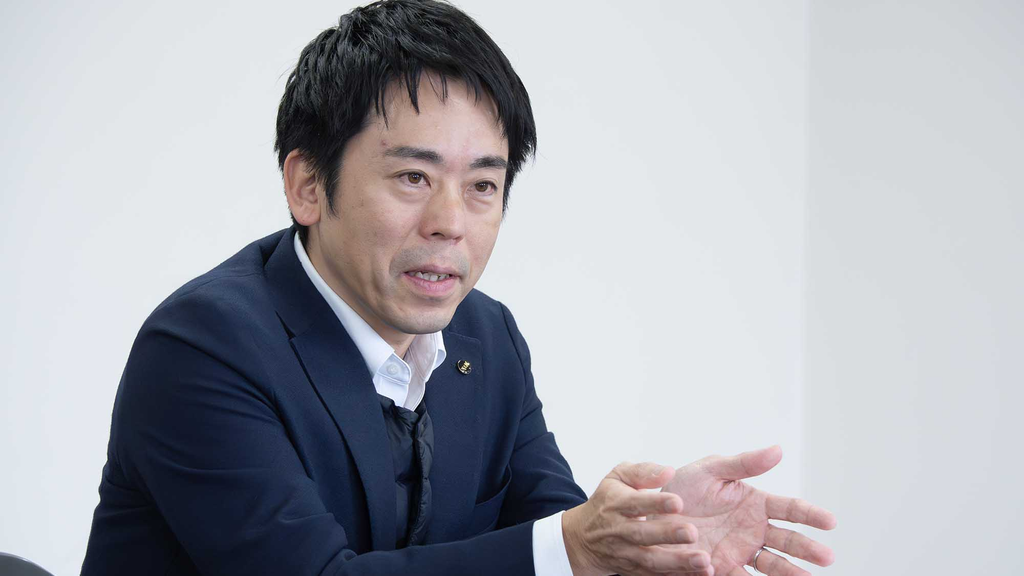
“Having experience from a deployment within the group was one of the things that got this started.”
The connection to the Kokubu Group’s in-house WMS, used across its sites, also mattered. The group has been improving this WMS for 10 to 15 years. Because PA-AMR was already connected to it and running in production within the group, Kokubu Hokkaido could move ahead confident that PA-AMR would fit into its existing operation.
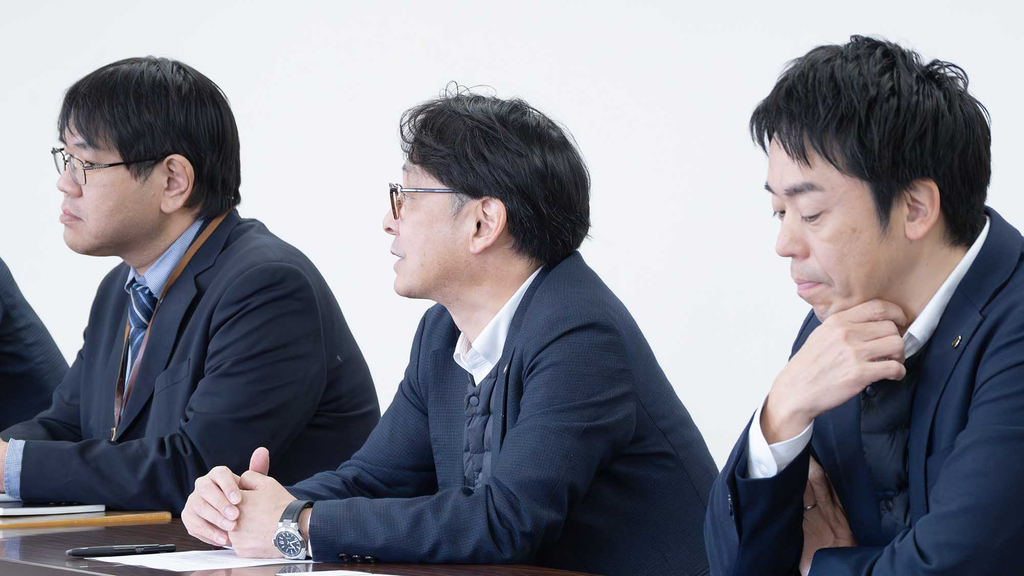
“Seeing it actually connected to our system and in use was a real reassurance.”
Deployed without major layout changes
The deployment needed no layout changes involving major construction. The team set up the network and cleared obstacles so PA-AMR could move safely, building the operating environment inside the existing floor. This was Sapporo LC’s first robot deployment, and the team found the process easier and more approachable than expected.
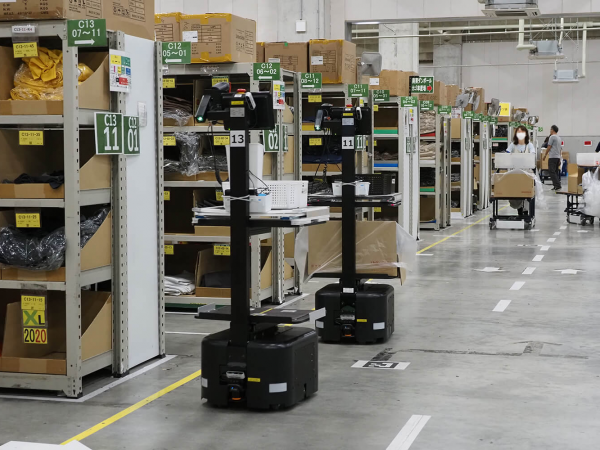
Some changes were still required. In the PA-AMR area of about 16,100 sq ft (1,500 m²), the team re-slotted locations to hold items PA-AMR handles well, such as each-pick items and items small enough to fit in a folding tote. Picking that had been done with six-wheel carts moved to a PA-AMR-based operation.
Order flow designed around the full operating day
Before go-live, the team ran requirements definition and simulation using outbound order data, and worked out order flow as well as slotting. At Sapporo LC, outbound orders begin dropping around 6 a.m. Receiving, QC inspection, best-by date checks, and putaway run until about 11 a.m., while outbound work continues in parallel until about 7 or 8 p.m. Priority orders can drop at any point during the day.
The team built the batching logic, the release sequence for PA-AMR, and the rules for inserting priority orders into the floor process. The aim was a system the center could run continuously across its full operating day, beyond simply getting the robots running.
“We built a time schedule so the work could continue all day. We wanted something we could keep using the whole time, not something that kept stopping and starting.”
About six months after detailed evaluation began in late 2024, Kokubu Hokkaido and Rapyuta Robotics had aligned site conditions and operations. The robots started running in July 2025 and moved to full production in August.
Floor adoption
Fast acceptance from the workforce
With any automation project, management has to ask whether floor associates will accept it. Sapporo LC ran training during startup, but once people started using the system, there was very little friction.

“There was almost none. I think everyone picked it up smoothly.”
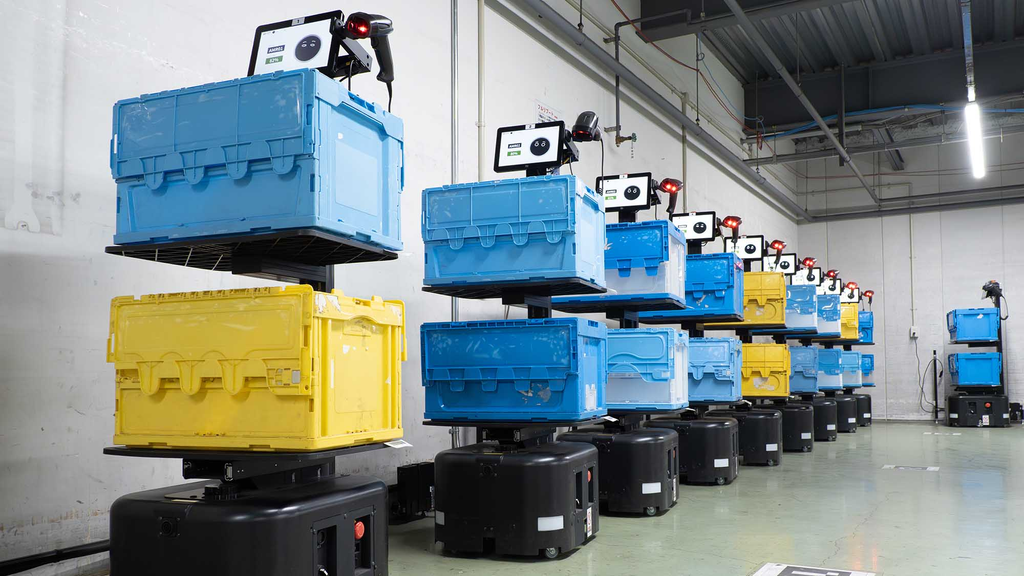
PA-AMR has a large screen, and work instructions are easy to see. Kokubu Hokkaido heard from older workers that the screen was easy to read. Learning the robot was not a meaningful barrier to the new process.
Temp workers successfully handled picking during startup
During startup, there were days when the regular part-time staff were off and only temp workers ran the floor. They had no problems operating PA-AMR and got the work done. This directly addressed the slow ramp-up for new hires described earlier.
After deployment, workers follow the robot’s screen and instructions, so methods that used to vary by person are now consistent. New associates no longer have to learn by shadowing experienced staff. Everyone works from the same standard flow.
“The way of working becomes almost identical, so individual methods basically disappear. It makes training very easy.”
At Sapporo LC, the goal was to redesign the work so it depends less on individual experience, shifting reliance from people to process, rather than to replace people with robots. PA-AMR made picking more efficient and laid the foundation for standardized work.
Results
Picking productivity more than doubled with fewer workers required
As the new way of working took hold, the numbers changed. Before deployment, Sapporo LC’s picking productivity was 41 LPMH. Early in startup, it reached about 50 LPMH at times, even while associates were still in training. Further improvement took it to 86 LPMH at the time of the interview and to 93 LPMH as of August 2026, when the article was published.
| Before deployment | Early startup | At the interview | August 2026 |
| 41 LPMH | About 50 LPMH | 86 LPMH | 93 LPMH |
Over the same period, floor headcount, including unloading, went from 8 to 9 people to 4 to 5. With about half the headcount, picking productivity rose from 41 to 93 LPMH, about 2.26 times higher.
Main changes before and after deployment (as of the interview)
| Item | Before deployment | After deployment |
| Floor headcount, including unloading | 8 to 9 people | 4 to 5 people |
| Picking productivity | 41 LPMH | 86 LPMH |
| Picker travel | Walked long distances with six-wheel carts | Walking distance greatly reduced |
| Cart handling | Fetched carts from the cart area and returned them after work | No fetching or returning carts |
| Carrying | Walked while carrying the handheld scanner and items | Less strain from carrying while walking |
| Mispicks | Occurred | None at the time of the interview, per the site’s assessment |
| Work methods | Individual methods remained | Common and standardized |
| Overtime | Routine | Consistently reduced |

Reduced travel, carrying, and cart handling
Daily work on the floor changed as well. Before deployment, workers fetched six-wheel carts from the cart area, made their rounds of item locations, and returned the carts when done. With PA-AMR, those extra tasks are gone, and picker travel has dropped sharply. Associates also spend less time walking while carrying handheld scanners and product. Heavy lifting is now limited mainly to tasks such as unloading.
Damage from collisions with six-wheel carts and similar equipment has also dropped. Because picking now includes barcode scanning, the mispicks that happened before deployment have not occurred as of the interview, according to the site’s assessment. Routine overtime has gone down, and the team no longer has to reshuffle labor to cover shifts.
Continuous improvement beyond the target
What sets Sapporo LC apart is that improvement did not stop once the productivity target was reached. Productivity is now at 93 LPMH, and Kokubu Hokkaido and Rapyuta Robotics’ customer success team continue monthly reviews to identify further improvements.
Worker-level data drives new standards
With individual login, PA-AMR shows productivity by worker. When people doing the same work show different productivity, the team can look at how the higher performers work and build that into training for others.
This takes standardization a step further. The team now uses data to improve the standard itself, and that way of thinking is starting to take root at Kokubu Hokkaido.
Improvement extends beyond worker methods. At first, PA-AMRs were spread across the warehouse. After reviewing actual operating data with Rapyuta Robotics, the team switched to Focus Pick, which concentrates PA-AMRs in a defined pick zone. As a result, picker travel dropped further.
The team reviews worker methods, PA-AMR placement and movement, item locations, and order flow together with data, rather than any one of them alone, to raise productivity across the operation.
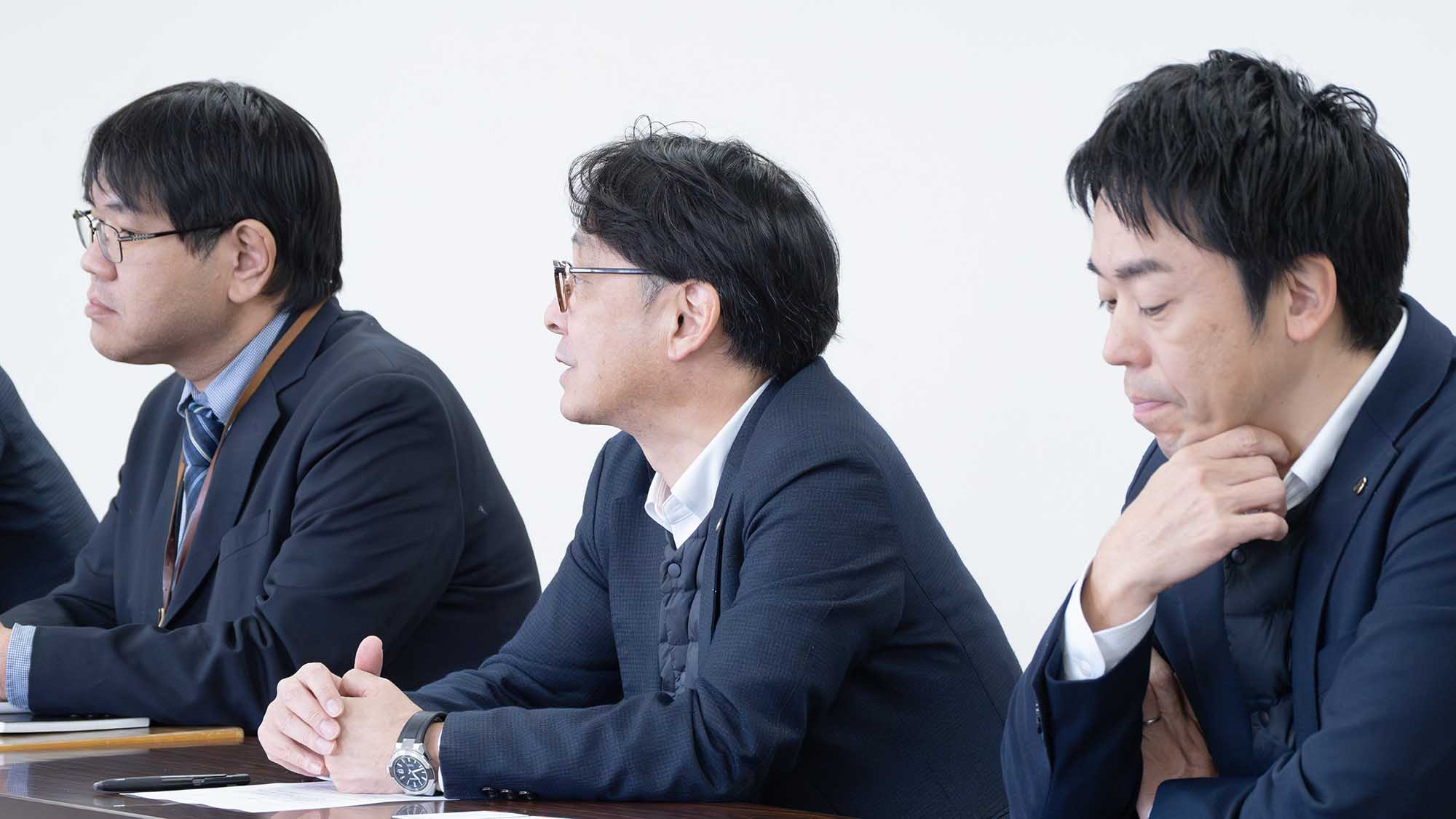
“Along the way to getting results, we’ve built an in-house routine of collecting data, analyzing it, feeding it back, and turning it into improvements.”
“Even after deployment, Rapyuta taught us how to read the data and discussed ways to raise productivity with us. Our team learned a lot. We’re really glad we brought it in.”
Key takeaways
1. Treat labor shortages as an operational continuity risk
The difficulty Sapporo LC faced in finding people is not limited to one site. According to Kokubu Hokkaido, hiring is hard even in the Sapporo area and harder still in rural areas. As population falls, delivery efficiency also declines, which makes it harder to keep delivering across a region as large as Hokkaido.
“We can’t secure people even in the Sapporo area, so rural areas are even tougher.”
On the delivery side, trucks carry loads from Sapporo out to rural areas but struggle to find backhaul loads into Sapporo. Kokubu Hokkaido continues to make improvements beyond the warehouse, such as coordinating delivery times with carriers. The labor shortage has become a question of whether the company can keep delivering goods across Hokkaido, beyond whether it can hire.
2. Match the automation approach to the facility
For new sites or dedicated centers with relatively simple operations, Kokubu Hokkaido also considers large-scale material handling equipment. Most of its centers, though, are existing buildings, each with different building and operating conditions.
“We have a lot of existing centers, so for those, I think the realistic approach is to bring in proposals like Rapyuta’s, something that assists people and works alongside them.”
Sapporo LC itself is an existing facility 30 to 40 years old. Deploying PA-AMR without major layout changes, while aligning it with the existing WMS and the current outbound operation, shows that an existing center is not necessarily out of reach for automation. Rather than replace everything at once, a site can change its work step by step, starting with automation that fits its conditions.
3. Build a continuous improvement system around the equipment
At Sapporo LC, a cycle is now running. PA-AMR standardized the work, and the team uses the resulting data to improve how both people and robots operate. From 41 LPMH before deployment, the site recorded 97 LPMH in March 2026, and it keeps working toward stable high performance and further gains.
Kokubu Hokkaido is also introducing a TMS to digitize truck and driver management, so it can capture data that used to be handwritten. It is also considering AI demand forecasting to estimate required staffing and other resources from forecast volumes.
For Kokubu Hokkaido, PA-AMR is one part of a broader effort to understand the logistics floor through data and run it for continuous improvement, rather than a one-off robot deployment. The company wants its floor team to build on that knowledge and to develop future digital transformation talent.
Sustaining operations as labor tightens
Rather than rebuild its existing center, Kokubu Hokkaido paired people with robots to standardize the work, and it uses the resulting data to keep improving. The program at Sapporo LC offers one practical option for keeping existing distribution centers running as labor becomes harder to secure.
Transform Your Piece Picking Efficiency
Discover how Rapyuta PA-AMRs can revolutionize your warehouse picking operations