At a glance
| Item | Details |
| Shipper | ACTUS Co., Ltd. |
| 3PL | DHL Supply Chain Japan |
| WMS | W3 sirius by Dialog Inc. |
| Site | DHL Sagamihara Logistics Center, Kanagawa, Japan |
| Business | Retail and wholesale of interior goods, furniture, and home goods |
| Main products | Interior goods, furniture |
| Area | About 12,900 sq ft (1,200 m²) |
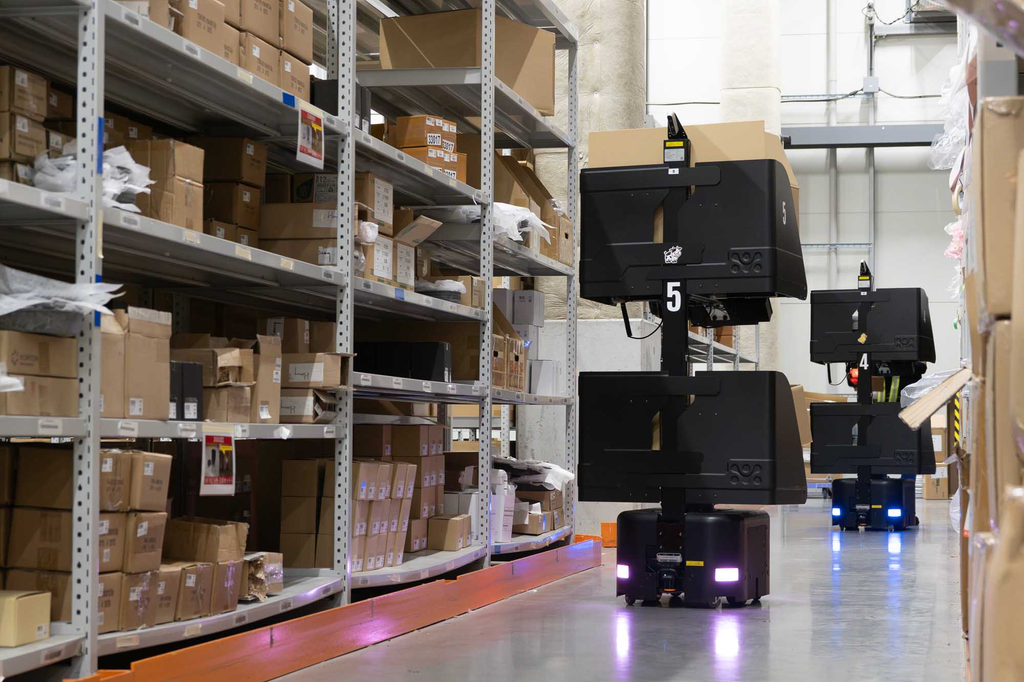
| Solution | 10 PA-AMR high-capacity robots |
| Go-live | September 2024 |
Key results
| Metric | Before deployment | After deployment |
| Picking productivity | 46 LPMH | 98 LPMH at go-live; 115 LPMH today |
| Temp workers per week | 25 | 19 |
| B2B packing productivity | About 50 LPMH | About 100 LPMH |
Picking and staffing figures as of July 2026. LPMH: lines per man-hour.
Summary
ACTUS, a Japanese lifestyle retailer, and its 3PL partner DHL Supply Chain Japan deployed 10 Rapyuta PA-AMR robots at DHL’s Sagamihara Logistics Center in September 2024. The results came in two stages: a large gain at go-live, then a second gain from continuous improvement after launch.
- Picking productivity rose from 46 LPMH under cart picking to 98 LPMH at go-live.
- Continuous improvement took it to 115 LPMH as of July 2026. The next target is 130 LPMH.
- The site now runs on its 19 regular staff with no temp workers, down from 25 a week.
- B2B packing productivity rose from about 50 to about 100 LPMH. The site also streamlined B2B packing by removing a separate QC check, supported by improved picking accuracy.
- Two PA-AMR features started as requests from this site: multi-step scanning for case-pack quantities and a tap-to-confirm step for tote placement.
- The success came from continuous improvement in which the shipper, the 3PL, and the technology vendors each contributed their expertise, supported by monthly reviews and operating data.
Interviewees
- Eiichi Minami, General Manager, Logistics Department, SCM Division, ACTUS Co., Ltd.
- Ikumi Sugiura, Operations Manager, Consumer & Retail Division, DHL Supply Chain Japan
The challenge
Market trends and customer needs keep shifting, especially in lifestyle retail. In fashion and interiors, trends, product mix, sales channels, and volumes change on short cycles. Product development, sales, and logistics all have to move with them.
That raises a practical question for logistics. Automation is one of the strongest ways to raise productivity. But automation that forces the operation to keep conforming to the equipment can become a constraint when the business changes again.
A capacity ceiling in sight
ACTUS sells furniture, interior goods, apparel, plants, and other lifestyle products through its own stores, ecommerce, and wholesale. When it began evaluating PA-AMR, the company was planning for growth and new store openings, and it expected the existing operation to hit its shipping capacity ceiling within a few years. The goals behind automation were to strengthen the logistics base serving stores and ecommerce, shorten shipping lead times, and standardize work as hiring became harder.
At the Sagamihara site in Kanagawa Prefecture, ACTUS directs the overall logistics operation as the shipper, and DHL runs floor operations as the 3PL. Eiichi Minami of ACTUS and Ikumi Sugiura of DHL Supply Chain Japan have led the improvement work on the floor.
A floor that never stops changing
ACTUS products vary in size, and so do their destinations. B2B shipments to stores and B2C ecommerce orders run differently, and daily priorities shift with volume. DHL was already adjusting the operation to volume and floor conditions well before PA-AMR arrived.
Walking, preparation, and physical strain
Before deployment, staff pushed carts through the whole warehouse on a single continuous route, picking small and large items alike. Time studies before deployment showed about 34% of work time went to walking and about 10% to pre-work preparation.
In interviews, the team also described the physical strain of moving picked items to the packing line. Some staff wore arm supports at work, and staff said they liked the job but found it physically hard. Because of this, Minami raised automation with DHL early on.
The approach
Minami wanted to know how much could be automated, and also whether the floor could still change after automation went in. With future changes already in view, locking the floor to the equipment would make it harder for logistics to keep pace with the business.
Selection principle: Do not automate everything. Let people, the WMS, and PA-AMR each do what they do best, and keep the ability to change the operation as conditions change.
Why PA-AMR
Minami weighed the PA-AMR investment against its return and its mid- to long-term operation. A pre-deployment simulation run by Rapyuta increased confidence in the expected results, which helped move the decision forward.
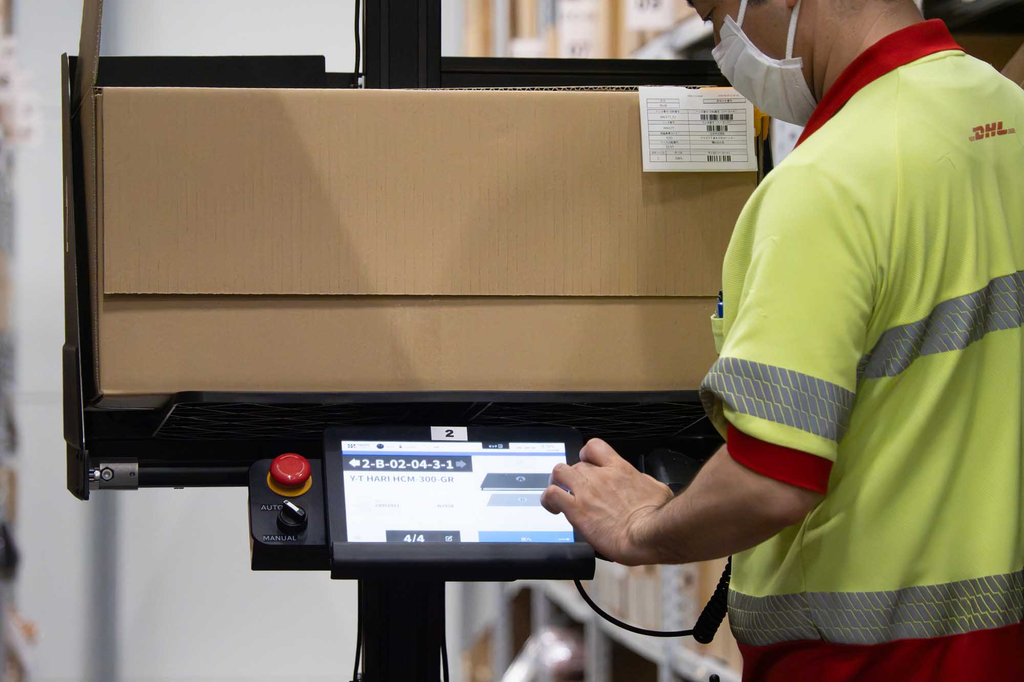
ACTUS looked for careful support before deployment and a support structure that would keep improving results after it. Two product points also fit the site: the flexibility to use different order allocation methods for store and ecommerce orders, and the high-capacity model that carries 75-liter totes.
A hybrid operation, connected to the WMS
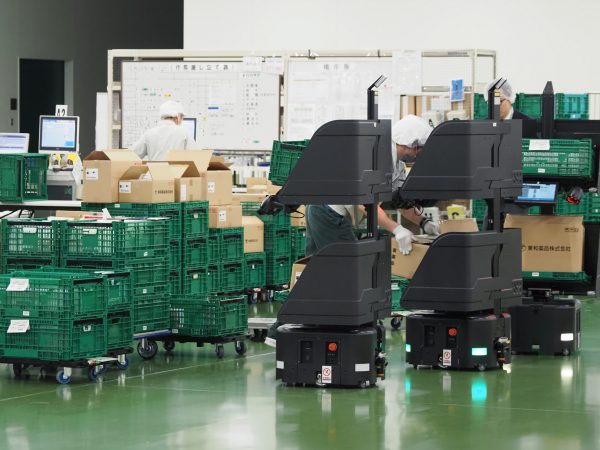
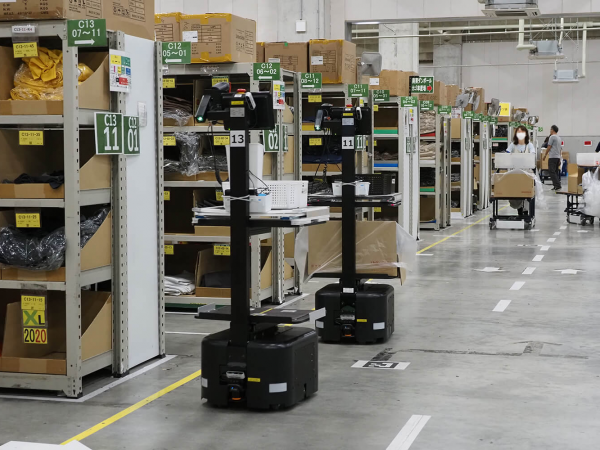
The Sagamihara site moved from cart picking to a hybrid operation. PA-AMR handles small items and carts handle large items. The design does not automate everything. It assigns work to people or robots based on product characteristics and the operation.
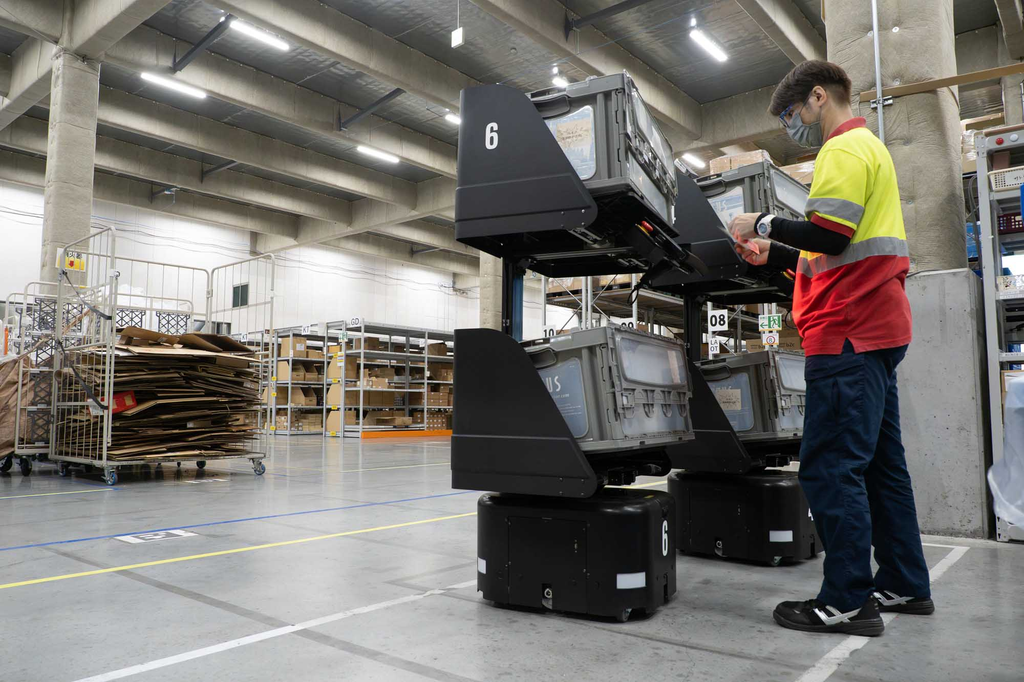
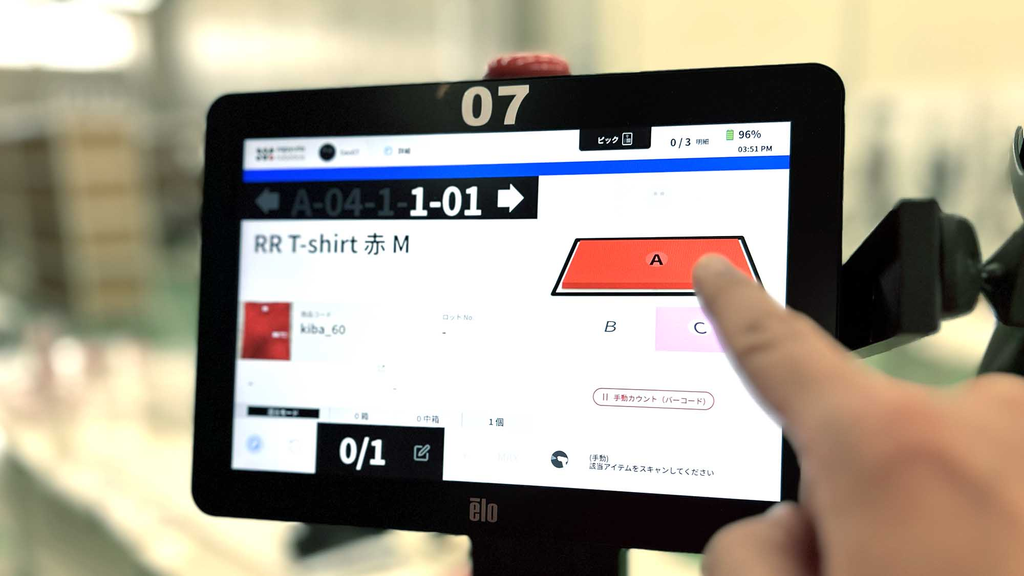
For picking, the team chose the PA-AMR high-capacity model (called PA-AMR XL at the time of deployment), which carries 75-liter (about 20-gallon) folding totes. It connected by API to W3 sirius, the warehouse management system from Dialog Inc. already running at the site, linking pick instructions and pick results. The integration also streamlines printed-document workflows and the handoff to packing. ACTUS as shipper, DHL Supply Chain Japan as 3PL, Dialog as WMS vendor, and Rapyuta Robotics designed the floor operation and the systems together.
A fallback built in from day one
The system does not route every order to PA-AMR automatically. In the WMS, the floor team decides which orders go to the robots and which are handled by people. The design accounts for priorities by store and by truck, and for rolling orders back to manual picking, so the floor always has a fallback.
At startup, the team did not release large order volumes at once. It broke work into small batches, around 30 a day, and ran carefully. Choosing a flexible product was one part. Designing an operation that could roll back if something went wrong was the other. Together they laid the foundation for stable operation.
The other key decision was that go-live did not mean finished. After launch, the team kept collecting floor issues and working through them with monthly reviews with Rapyuta, data analysis, deeper use of the WMS integration, and feature improvements. ACTUS, DHL, Dialog, and Rapyuta worked as one team to keep raising the results.
Making it stick on the floor
The floor did not reject the robots
A common worry with automation is whether workers will accept the robots. At this site, some staff found the robots interesting and others were thrown by how different the work felt. Under Minami’s vision, Sugiura moved the floor toward working with robots. Before long, when the team paused the robots for a system adjustment, staff asked when the robots would be back on.
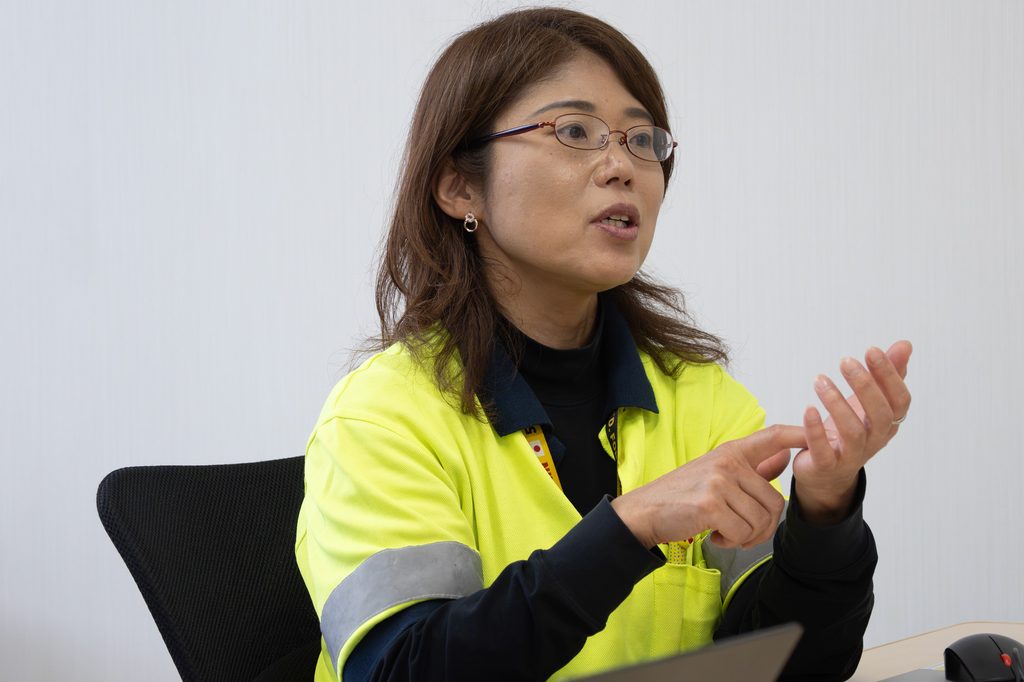
“The robots have become such an important part of our daily work that I feel like everyone might quit if we took them away.”
That is how fully the system has taken hold today.
“In a word, inconvenient”
What frustrated the floor early on was not the robots themselves. It was that some things the old process allowed were no longer possible in the new one. Sugiura sums up that period as “in a word, inconvenient.”
Fix 1: Multi-step scanning for quantity errors
The clearest example was quantity errors on items stocked by the case or inner pack. To pick 30 units of an item packed 6 to a case, workers in the early days had to calculate the number of cases themselves. Each worker handles hundreds of lines a day, and repeating that math created stress and led to quantity errors.
The team took the floor’s feedback to Rapyuta, which judged it a problem likely to appear at many other sites. Rapyuta developed and released multi-step scanning, which combines the item barcode and a quantity barcode to count the required units. The task cannot be completed if the count is over or short, so workers no longer do the math in their heads. Sugiura says removing the calculation reduced mis-ships and stress, and productivity rose as a result, a virtuous cycle.
Many of the productivity features in PA-AMR today started the same way, as requests the customer success team heard on customer floors. That is part of what makes PA-AMR distinctive.
Fix 2: One confirmation tap to cut wrong-tote errors
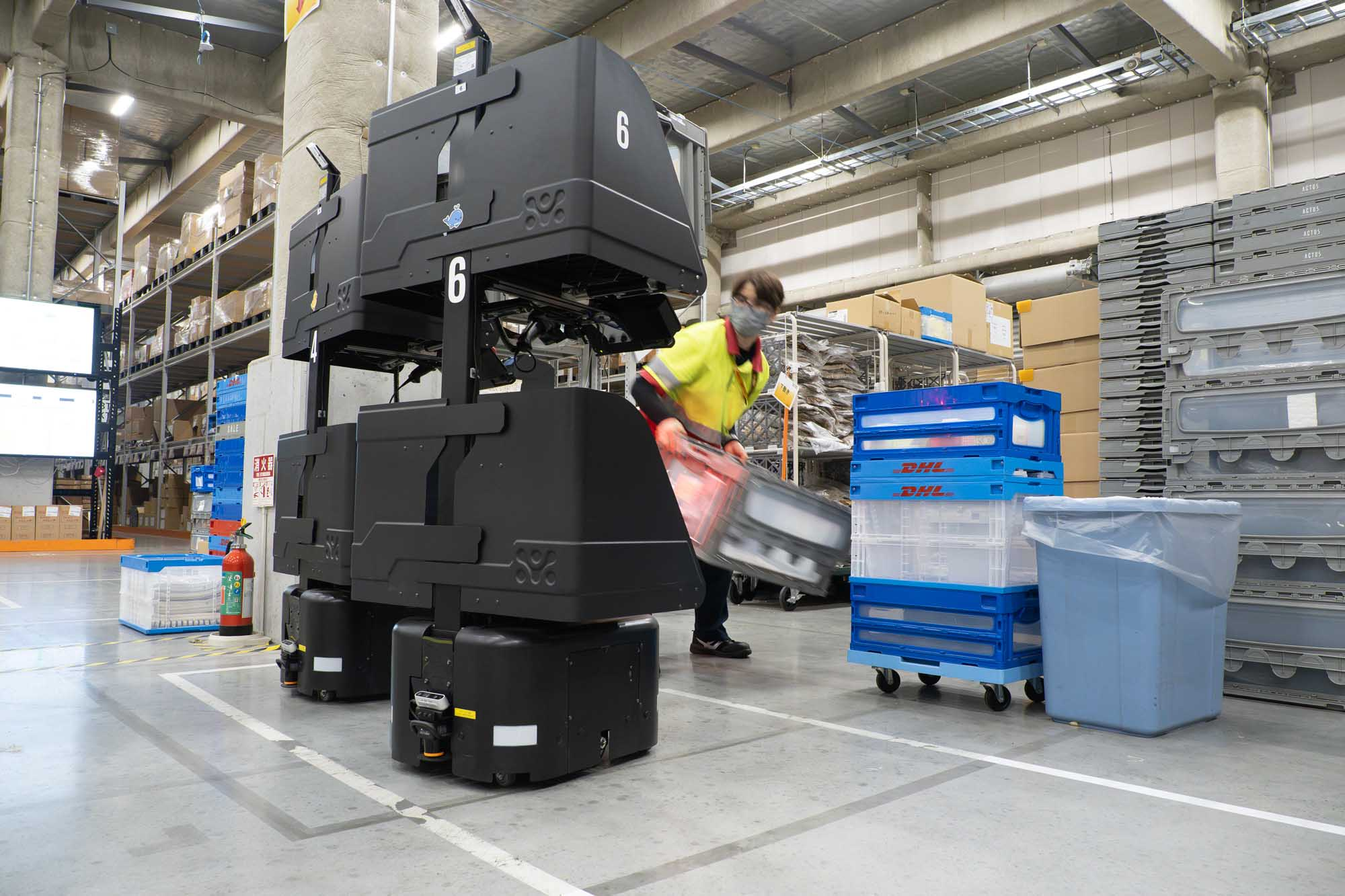
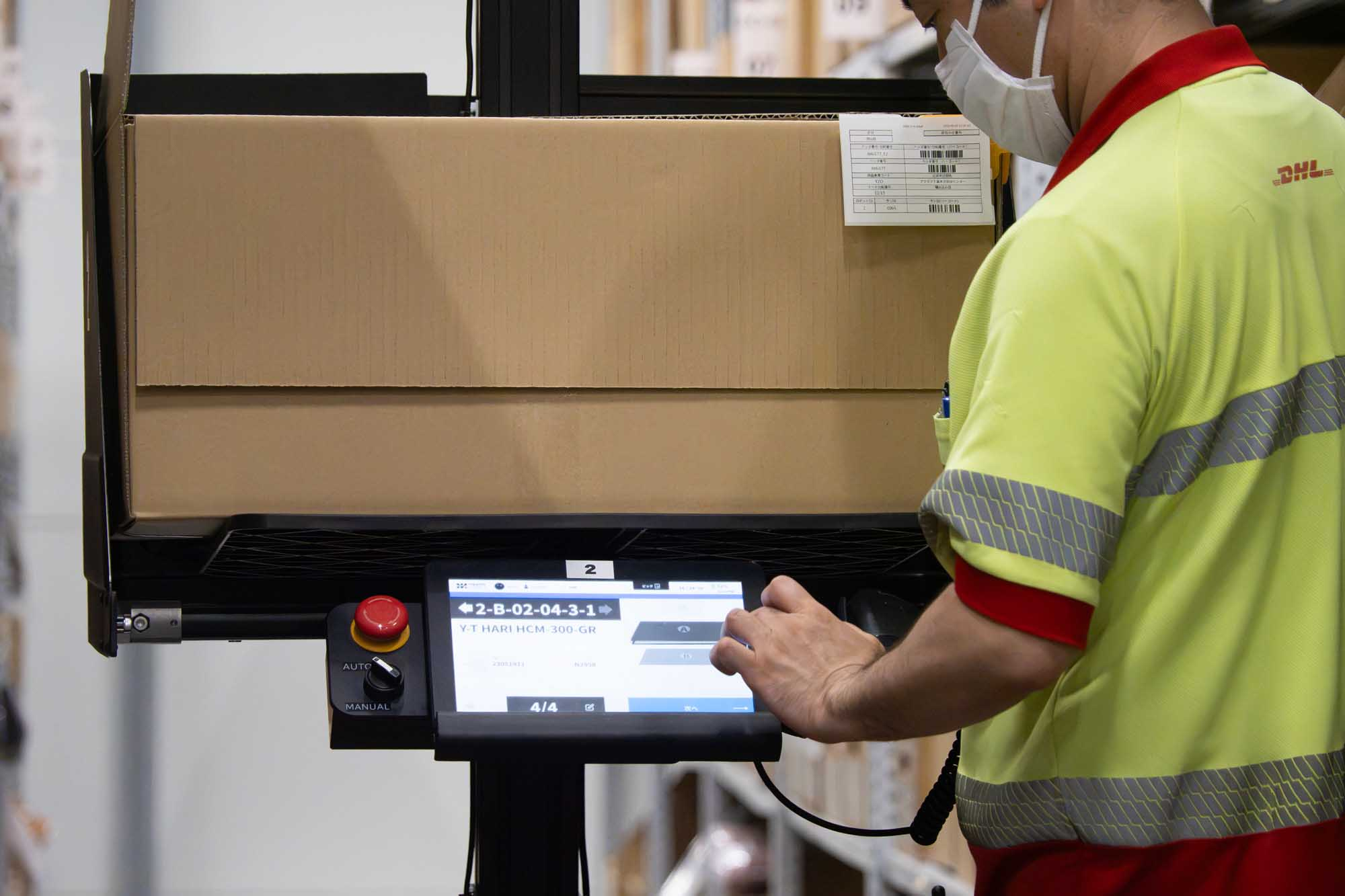
The other major issue was items going into the wrong tote on the high-capacity model, which carries two 75-liter totes, one above the other. Rather than rely on an on-screen display and ask workers to be careful, the floor team and Rapyuta weighed several options. In the final design, the target tote flashes on screen and the worker taps its position once to confirm before placing the item. The change was intended to have the same effect as point-and-call checking on the floor.
“That really cut errors. You add one action yourself, so you’re conscious of it: tote A, right? It wasn’t about efficiency. We added one action for accuracy.”
On efficiency alone, fewer steps look better. Here, the team added one confirmation step on purpose to raise accuracy. It is a clear example of revising a feature based on how the floor actually works.
Fix 3: Reorganizing the day, not only the equipment
Making it stick took operational changes from DHL as well as product changes from Rapyuta. To avoid conflicts with forklift work while PA-AMR runs, DHL moved replenishment and inventory maintenance to the late shift. Everyone finishes outbound first, then everyone moves to putaway. The team restructured the timing of the whole day.
DHL did not bend the floor to fit the equipment. The team learned how the equipment works and then rethought how work is organized across the warehouse. That operational adaptation was essential to making PA-AMR part of daily work.
Results
In aggregated figures for each period, picking productivity rose from 46 LPMH before deployment to 98 LPMH at go-live. Continuous improvement has since taken it to 115 LPMH. The next target is 130 LPMH.
| Before deployment | At go-live | Today (July 2026) | Next target |
| 46 LPMH | 98 LPMH | 115 LPMH | 130 LPMH |
It matters to read 46 to 98 and 98 to 115 separately rather than as one arrow. The first is the initial effect of deploying PA-AMR. The second is the additional gain from learning to get the most out of it after go-live.
Stage 1, 46 to 98 LPMH: less walking, searching, and preparing
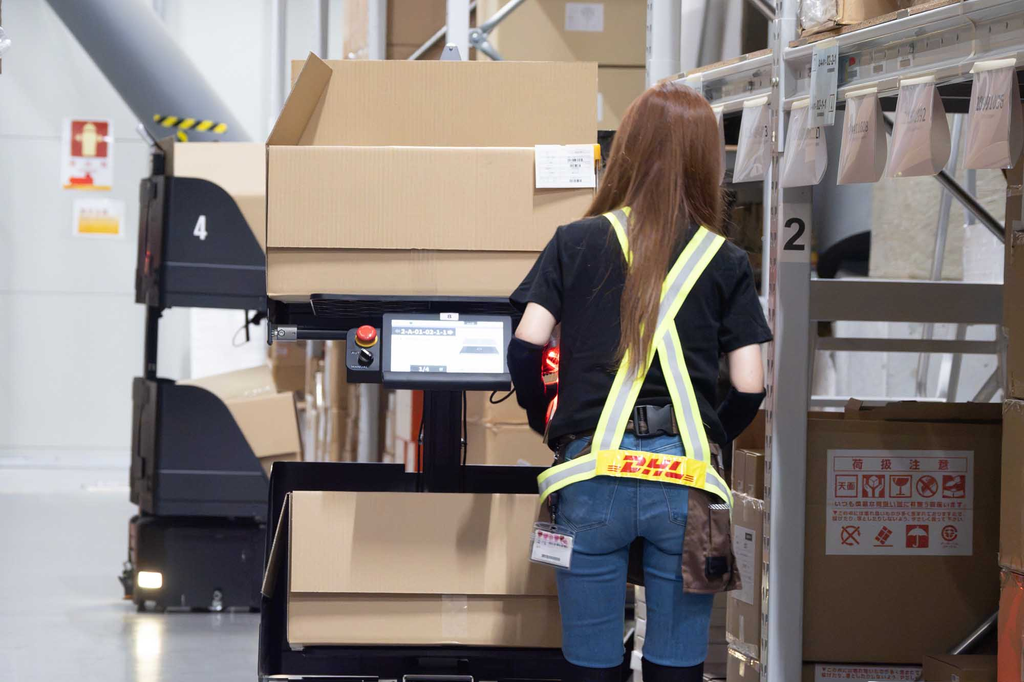
Before PA-AMR, workers pushed carts through a large warehouse and searched for items using paper pick lists. With PA-AMR, each worker covers a limited zone and the Picker Guide System (PGS) shows the next location on screen. Workers handle multiple orders at once, and prep work such as printing and distributing pick lists drops. Workers also pick hands-free, which reduces physical strain.
Staff recall reaching the high 80s LPMH on the very first day. The formal comparison uses the aggregated 98 LPMH, but the effect was felt right away.
Stage 2, 98 to 115 LPMH: the same AMR does not give the same result
The site did not stop there. DHL’s view is that the same PA-AMR deployment would not have reached this level without an operation built to match it. So the team kept improving across five areas.
Improvement 1: Tune slotting and process around PA-AMR
Using PA-AMR travel logs and pick-location data, the team compared pick frequency and product category and kept revising inventory placement. This reduces robot travel, and it also lets the team use data to decide where products should sit across the whole warehouse.
The shift changes made during adoption also evolved into a way to raise productivity across the warehouse. The team staggered receiving, inventory maintenance, and replenishment to put outbound first, and everyone does putaway after the robots finish for the day.
Improvement 2: Use data to find causes, not to judge people
PA-AMR shows LPMH, dwell time at the pick face, walking time, and other measures by user ID. The numbers make differences between workers clear. But DHL did not simply coach the slower workers.
First, the team watched the actual work. That revealed reasons the numbers cannot show: a worker tidying shelves, carefully arranging items in the tote, or losing time finding locations. Low productivity does not mean someone is slacking. In some cases, workers were taking on tasks outside their role with good intentions.
Improvement 3: Standardize to what anyone can repeat, not to the fastest worker
One effort Sugiura counts as a success was turning the work into a defined method. Techniques that depend on individual skill, such as holding several items at once while scanning quickly, were left out of the standard.
Instead, the team identified methods anyone could repeat comfortably and standardized them in detail: the order of placing items into totes, the order of scanning barcodes, the order of pressing buttons, and how much to hold at once. Training was staged. Workers focus first on the minimum required steps and add the next step once they have mastered it.
In one example, a worker who had plateaued around 70 LPMH for a long time went on to consistently exceed 100 LPMH. The change came from an environment that made the work less confusing and easier to repeat, not from asking that person to try harder.
“How do we let workers concentrate on the work without having to think? I see building that environment as our job.”
Improvement 4: Use the WMS and PA-AMR to standardize judgment calls
Some ACTUS products need extra handling at the pick, such as liquids and small items. Liquids go into bags to prevent leaks, and cushioning keeps items from shifting in the tote.
At first, these calls were left to each worker. That produced uneven results, with some workers slower because they did the extra handling and others faster because they skipped it. The team registered the handling conditions in the W3 sirius item master and linked them so they display on PA-AMR. The rule became simple: if it shows on screen, do it, and if it does not, skip it.
Sugiura says the change meant one less thing to think about, less stress, and a standardized process. It took the value of the WMS and robot integration beyond data exchange to removing judgment calls from the floor.
Improvement 5: Turn monthly reviews into the next improvement
ACTUS, DHL, and Rapyuta held monthly reviews to track floor issues, requests, and operating data. Some specific issues became product features, including multi-step scanning and the tote confirmation step.
The cycle is simple: identify the issue, confirm the cause with data and on the floor, change the operation or the feature, and check the effect. Repeating it moved the relationship beyond maintenance to customer success focused on getting the most from the deployment.
Gains beyond picking
The impact shows up in more than LPMH. Picked items used to pile up before the next process. Now, especially for B2B orders, they flow smoothly from picking into the next step. The gains have carried into packing, where B2B packing productivity has risen from about 50 LPMH to about 100 LPMH.
To remove this bottleneck, the site eliminated a separate pack-station QC check for B2B shipments, based on improved picking accuracy. If picking gets faster but work stalls between processes, the bottleneck only moves and warehouse capacity stays the same. The pack-station check was finding problems on only a fraction of a percent of orders, because picking with PA-AMR was already catching nearly all errors.
Even when the logic is sound, the risk of mis-ships makes this a hard step to take. Masashi Nobusawa of Rapyuta’s customer success team, who supports the ACTUS account, describes Minami as flexible and quick to act, ready to try interim fixes and test new features Rapyuta proposes.
“Even without the pack-station check, quality can’t drop. ACTUS quickly accepted the idea of adding one confirmation action to protect quality, and it has become a strong example we can share with other customers.”
A floor that no longer depends on temp labor
Before deployment, the site needed 19 regular staff plus about 20 to 25 temp workers a week. Today it runs on the 19 regular staff and no longer depends on temp labor. The change goes beyond headcount. It cuts the recurring work of hiring and training temps, and it lets experienced regular staff drive both quality and productivity.
Why it worked
The robot alone was not the success factor
Concluding that this worked because of a high-performance robot misses what mattered most. PA-AMR’s functions drove much of the initial gain from 46 to 98 LPMH. Reaching 115 LPMH, and a floor that no longer depends on temp labor, came from continuous improvement in which the shipper, the 3PL, and the technology vendors each contributed their expertise.
Shared goal: raise productivity and build a logistics operation that can keep supporting change and growth in the business.
| Party | Role |
| Shipper: ACTUS | Direction, business decisions, commitment to the floor |
| 3PL: DHL | Retail logistics expertise, floor operation design, execution of improvements |
| Technology: Dialog and Rapyuta | WMS, robots, data, feature improvements, ongoing support |
The shipper owns the improvement instead of handing it off
Even before deploying PA-AMR, ACTUS and DHL had established a collaborative approach to operational improvement, openly sharing productivity data and working toward shared goals. This relationship helped both parties stay committed to improving performance and sharing the benefits of their joint efforts.
Minami has worked on warehouse floors himself and stays involved in detail, down to what floor workers struggle with. He also keeps watching for new solutions that could improve his operation. One detail stood out in the interview. Before PA-AMR, manual picking involved moving heavy items, and Minami knew that one staff member wore a support brace for that work. Reducing physical strain became one of the reasons to automate.
In automation and beyond, the most important ingredient for logistics that works as revenue infrastructure is a shipper that stays committed to the floor as an owner of improvement, rather than setting targets and leaving the rest to the 3PL and vendors. That commitment is the foundation for continuous improvement.
“Not many shippers that outsource to a 3PL attend every customer success review. Mr. Minami attends every one, knows the details of the operation and each individual worker, sets the next goal as soon as one is reached, and leads every company involved in the project.”
The 3PL turns retail expertise into floor improvements
Many DHL team members at the site have retail logistics experience. They understand retail-specific conditions such as product characteristics, store shipments, B2B and B2C, and volume swings, and that is a strength in designing an operation around ACTUS.
That value shows in specific actions. The team revisited slotting, shifts, task order, and training methods in detail, and when a worker’s numbers were low, they observed the floor to find out why. They turned ideas into methods the floor could repeat and made them stick across the team.
Conventional wisdom says that dividing roles by process, with each worker focused on one area, raises productivity. Sugiura says that at this site, the data shows no clear difference in overtime between fixed roles and everyone moving flexibly. So when one process finishes and another is still running, everyone helps finish it. Sugiura sees this as good for team management too.
“Here, no task is someone else’s problem. That’s the mindset. If ecommerce isn’t done, everyone goes to finish ecommerce. We’re building an organization with that mindset, and from the management side I think it’s in a good place.”
The technology vendors never lock the floor to the equipment
Dialog’s W3 sirius and PA-AMR were not designed to take every decision away from the floor. The floor can change which orders go to PA-AMR, what people handle, and how store and ecommerce orders are split, based on conditions.
Rapyuta did not treat go-live as the end of support. Through monthly reviews, data reviews, improvement proposals, UI changes, and feature development, it stayed focused on raising results after deployment. The feature updates and productivity measures ACTUS expected at deployment are continuing in day-to-day operation.
People are at the center of the reviews
Minami knows each worker on the floor, and one of the biggest challenges in continuous improvement turned out to be people. Workers here do some tasks at the pick face while picking, and dwell time at the pick face varies widely from person to person. That has been a hard problem for Sugiura, who puts heavy emphasis on training.
Rapyuta’s customer success review deck includes productivity trends to identify where additional training may help. The focus is on supporting workers and improving processes, not evaluating individuals. It is not there to blame workers with lower relative productivity. It is there so the shipper, the 3PL, and the technology vendor can agree on specific training and work on the results together. The training results described in this story came from that collaboration.
That so much of an automation review goes to people may be surprising. It may also be a sign of Minami’s commitment, Sugiura’s determination to keep improving, and the technology vendors supporting both, all working as one.
Three lessons from this case
- Choose automation that lets you keep changing. When the business changes, logistics changes, and automation has to accommodate those changes.
- Treat go-live as the start of improvement, not the finish. PA-AMR delivers a solid gain at deployment, and floor data and real operation leave room to extend it.
- Do not leave automation to the vendor. The shipper, the 3PL, and the technology vendors look at the same numbers, work toward the same goal, and each own improvement in their area. These results came from that relationship working.
115 LPMH is the next starting point
Picking productivity is now 115 LPMH, and the site is already aiming at 130 LPMH. Beyond the 115 LPMH figure, the team built a way to get the most from the equipment and keep changing the floor, the systems, and the robots to go further.
When change is constant, logistics automation should not be a finished design to protect. It needs to keep adapting to the business and the floor. ACTUS and DHL show that flexible technology needs a partnership that keeps improving toward a shared goal.
ACTUS needed revenue infrastructure to support the sales targets in its mid-term business plan. Minami did not leave that to others. With Sugiura at DHL as his partner, he drew solutions from vendors such as Dialog and Rapyuta, showed ownership and leadership, and built a team in which every party keeps moving toward one goal.
ACTUS treats this as part of reaching the business goals in its mid-term plan, rather than as a standalone automation success. The PA-AMR deployment is a milestone on the way to broader business success, and warehouse automation is worth viewing from that wider perspective.
Transform Your Picking Efficiency
Book a demo session with our solutions expert to see how Rapyuta PA-AMRs can improve your warehouse picking operations in real time.